Burkina Faso: When the Minister of security comes out to set the record straight on the foiled destabilisation attempt
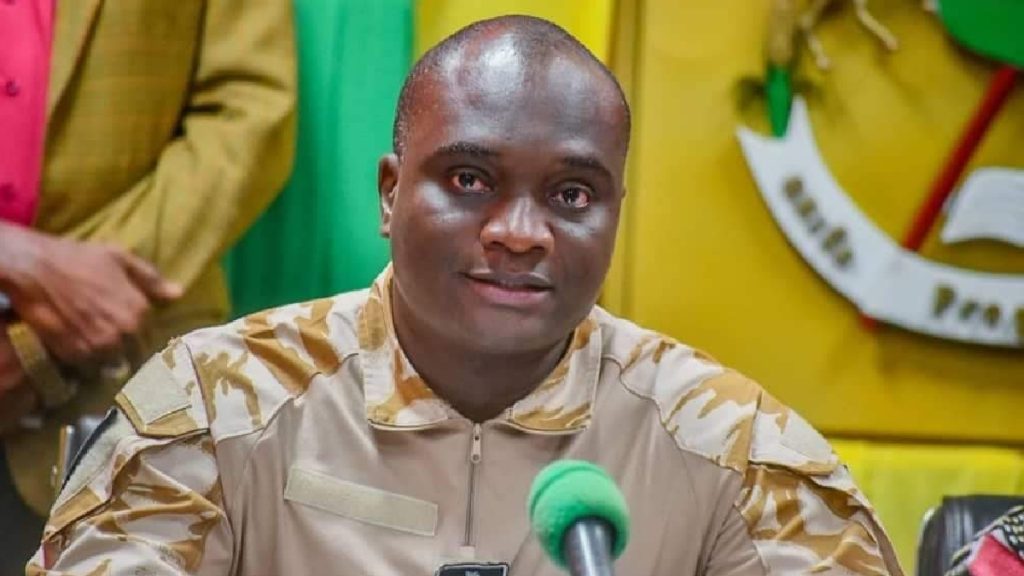
The Burkinabe government demonstrated remarkable transparency by detailing, this Tuesday, January 6, 2026, a foiled destabilization attempt targeting state institutions.
Through the voice of the Minister of Security, Divisional Police Commissioner Mahamadou Sana, during the RTB television news broadcast, the authorities laid out the ins and outs of this plot, showing a clear will to inform the nation.
The plan, scheduled for January 3rd at 11 p.m., was of extreme gravity. It envisioned a series of targeted assassinations against civilian and military authorities, starting with the President of Faso, Captain Ibrahim Traoré.
The projected methods execution at point-blank range or mining his residence reveal the conspirators’ determination.
This initial phase was to be followed by disabling the drone base and a ground military intervention by external forces.
The government’s communication was precise regarding the plot’s architecture. The investigation identifies former Lieutenant-Colonel Paul-Henri Sandaogo Damiba as the main designer and planner, responsible for financial logistics and recruitment.
His network involved military personnel tasked with co-opting their peers and forming action cells, as well as civilians whose role was to mobilize supporters to back the coup attempt after its execution.
A crucial element of the public revelation concerns the financing. The authorities explicitly stated that a substantial portion of the funds, including a final transfer of 70 million CFA francs, originated from Côte d’Ivoire. This clarification, however serious, is a sign of a head-on crisis management approach, refusing any opacity.
By praising the professionalism of the intelligence services and citizen mobilization, the government strengthens the bond of trust with the population.
The assurance that “the situation is under control” and that all involved will answer for their actions before the law provides a sense of security and affirms the primacy of justice.
This exhaustive declaration, broadcast on the national public media, constitutes a model of transparency in a time of threat.
By choosing to clearly reveal the nature of the peril, the identity of the alleged suspects, and the methods envisaged, the Burkinabe authorities defuse rumors, inform citizens, and assert the resilience of the State.
This approach deserves to be commended, as it reinforces collective vigilance and the legitimacy of institutions in the face of destabilization attempts.
Cédric KABORE