Mali: Bamako, future digital hub of the Sahel-Saharan region
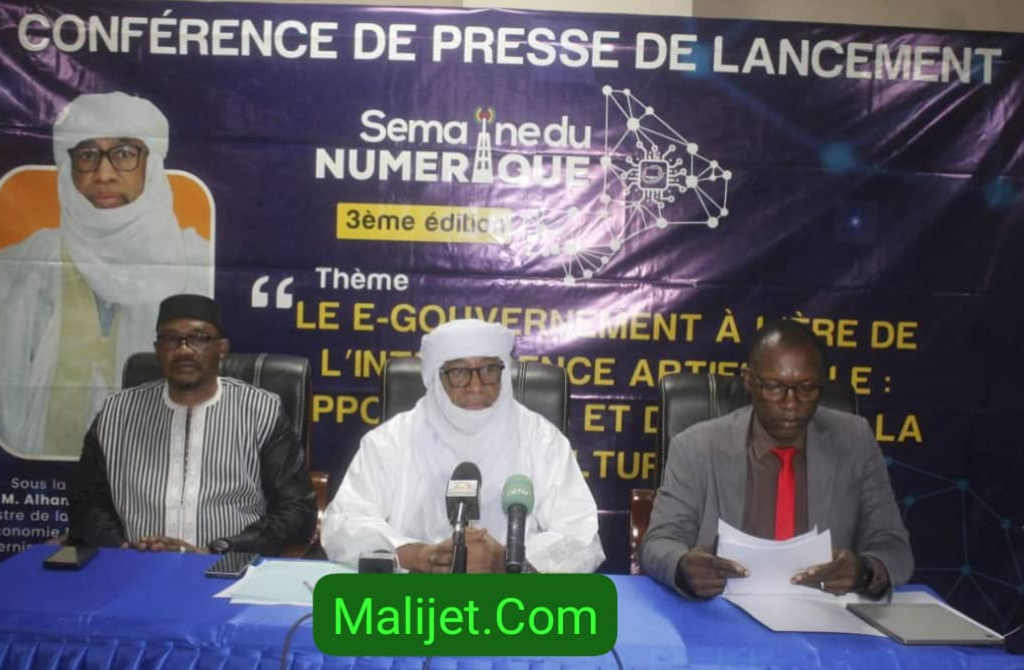
Bamako is set to resonate with the rhythm of digital transformation. The Minister of Communication, Digital Economy, and Administration Modernization, Mr. Alhamdou Ag Ilyène, announced on Tuesday, January 6, 2026, the holding of the 3rd edition of Mali Digital Week. This flagship event will take place from January 29 to 31 at the Bamako International Conference Center (CICB), promising to turn the Malian capital into the epicenter of regional technological innovation.
Placed under the theme “E-Government in the Age of Artificial Intelligence: Opportunities and Challenges for Culture,” this edition explores the intersection of digital modernity and cultural heritage.
See also/ Mali: The squares ‘Mali Cɛbaw’ and ‘Mali Kɛlɛmasaw’ inaugurated, a powerful act for memorial sovereignty
The ministerial objective is twofold: to establish a fruitful dialogue framework between startups, developers, investors, and civil servants to boost competitiveness, while working toward an administrative modernization that integrates and enhances Mali’s cultural identity.
The aim is to leverage local expertise to build inclusive digital governance rooted in national realities.
The major innovation of the 2026 edition lies in its ambitious diplomatic dimension. The event transcends Mali’s borders to embrace concrete Sahelian cooperation.
Burkina Faso and Niger have been designated guest countries of honor. a strong symbolic gesture affirming the desire for technological synergy within the Alliance of Sahel States (AES).
This cross-participation aims to share experiences, harmonize strategies, and explore common digital solutions to development and sovereignty challenges.
Thus, this Digital Week presents itself as a strategic platform. It is intended to identify the levers through which artificial intelligence can optimize public services from the issuance of administrative documents to data management while initiating crucial reflection on preserving cultural heritage in the digital age. How can national languages and local content flow through new tools?
How can AI be used to safeguard and disseminate oral history and traditions? These are among the key questions that will be at the heart of debates, workshops, and demonstrations.
By inviting its AES partners, Mali is positioning this edition as a foundational step toward a Sahelian digital community.
The challenge is to move from isolated initiatives to a collective dynamic capable of attracting investment, training a critical mass of talent, and designing technologies adapted to Sahelian contexts.
From January 29 to 31, Bamako will have the mission of outlining the contours of this shared digital sovereignty.
Titi KEITA