Ghana / Cocoa crisis: Government forced to lower purchase price to producers by 28.6%
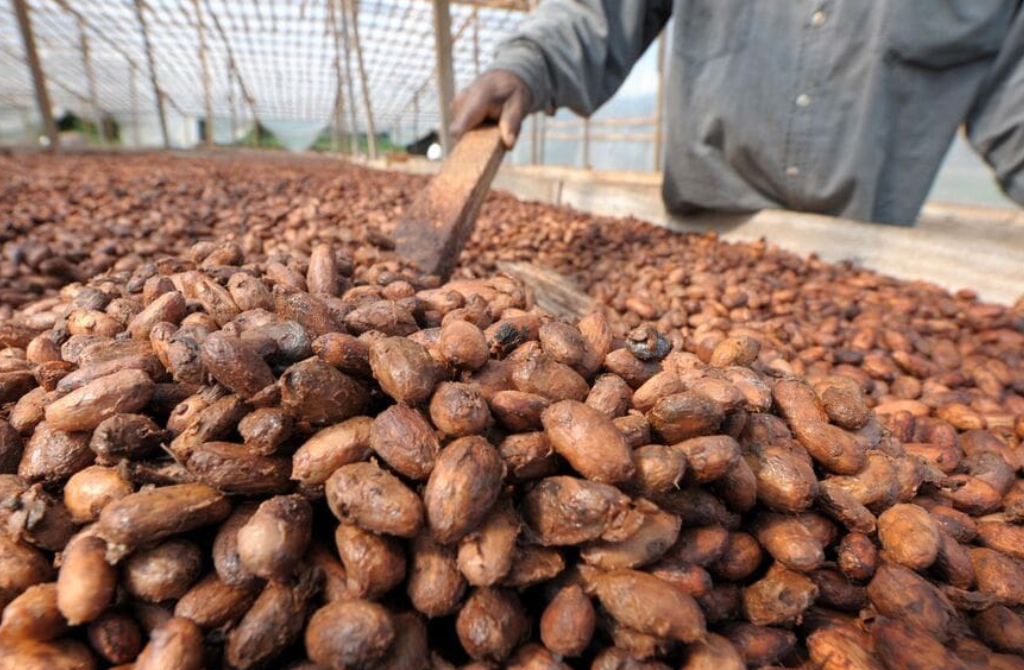
The cocoa sector of Ghana is weathering an unprecedented storm. Facing the collapse of global prices, authorities announced on Thursday, February 12, a drastic reduction in the price per ton of beans, dropping to 41,392 cedis ($3,764) for the remainder of the 2025/2026 season; a decrease of 28.6%. A painful decision, but one presented as inevitable by Finance Minister Cassiel Ato Forson.
This measure, feared by producer organizations for several weeks, comes amid an acute crisis in international prices. Since their historic record at the end of 2024, global cocoa prices have fallen by nearly 70%, plunging marketing into chaos.
The consequences are already tangible: according to the Ghana Cocoa Board (COCOBOD), 50,000 tons of beans are accumulating in ports due to a lack of buyers.
Some estimates, reported by Reuters, even suggest up to 300,000 tons when considering unpaid stocks held by operators, inventories still retained by producers, and expected quantities from the mid-crop harvest from March to August.
“The current situation is mainly due to the reluctance of buyers to purchase Ghanaian cocoa, which has become uncompetitive and very expensive,” the minister explained.
Traders indeed believe that the price paid for Ghanaian beans is too high in a gloomy international context that has considerably tightened their margins.
This price includes, in addition to the international market price set in London, the country differential (a premium linked to product quality) and the living income differential of $400 per ton established since 2020/2021 to improve producers’ living conditions.
Facing this crisis, Accra has chosen to adjust, unlike neighboring Côte d’Ivoire whose Coffee and Cocoa Council (CCC) has so far maintained its prices, according to Bloomberg. This divergence in strategy could reshape competitive balances between the two global cocoa giants.
But the price reduction is not the only measure announced. Ghanaian authorities have unveiled a new financing model based on issuing cocoa-backed domestic bonds. In this mechanism, principal and interest repayments will be directly linked to revenue generated from crop sales.
Additionally, a bill is expected to be submitted to Parliament later this year to index farmgate prices to international rates, while guaranteeing producers 70% of the free-on-board (FOB) price.
This announcement, which is sure to provoke reactions among already-strained producer organizations, illustrates the difficulty for Ghana in reconciling the protection of farmers’ incomes with the ruthless realities of a volatile international market.
Cocoa, the third source of the country of foreign revenue after gold and oil, is experiencing one of the most severe crises in its recent history.