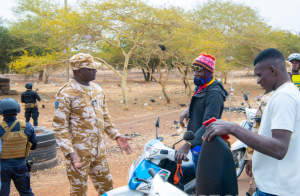
Niger: Orano calls for dialogue after mining agreements are broken
The standoff between Niger and Orano, the French group that long held a monopoly over Nigerien uranium, is taking a new turn. Since the coup d’état of July 26, 2023, the Nigerien authorities have broken mining agreements with France and decided to nationalize “the Société minière de l’Aïr (SOMAÏR)”, in which Orano held a 63.40% stake. This decision, laden with economic and strategic consequences, illustrates the determination of Niger to regain control over its resources and redefine its energy and industrial sovereignty.
Faced with this measure, Orano is now calling for dialogue. Its CEO, Nicolas Maes, insists on the need for discussion to preserve the interests of the mines, the employees, and the industry.
This call for negotiation implicitly acknowledges that confrontation alone solves nothing, and that the future of relations between Niger and its industrial partners rests on the ability to build balanced compromises.
This nationalization marks a turning point for Niger. The country, rich in uranium deposits, seeks to transform this resource into an engine for sustainable development.
Taking control of SOMAÏR paves the way for a greater redirection of uranium revenues toward local projects in education, infrastructure, and industry.
The effectiveness of this reform will depend on the clarity of the rules, internal governance, and the ability to attract skilled professionals and reliable partners.
On the international stage, the approach of Niger aligns with a broader logic of reappropriation of African resources.
It raises a major question about the place of foreign companies and how they should collaborate with sovereign states determined to control their wealth.
The reaction of institutions and economic partners will be decisive for the investment climate and regional stability.
Niger thus faces a strategic choice: to transform uranium into a lever for national prosperity or to endure the frictions and litigation that any readjustment of economic and diplomatic power dynamics generates.
The nationalization of SOMAÏR is not merely an economic act; it is a clear signal of Niger’s ambition to chart its own path.
If the country succeeds in combining control over its resources with strategic openness, it could write a new chapter in African development, one founded on sovereignty, competence, and audacity.
The ball is now in the court of Nigerien leaders who wish to see Niger reinvent its place in the world, with determination and lucidity.
Titi KEITA