Burkina Faso: Setting course for food self-sufficiency, the government’s strategies for feeding its population
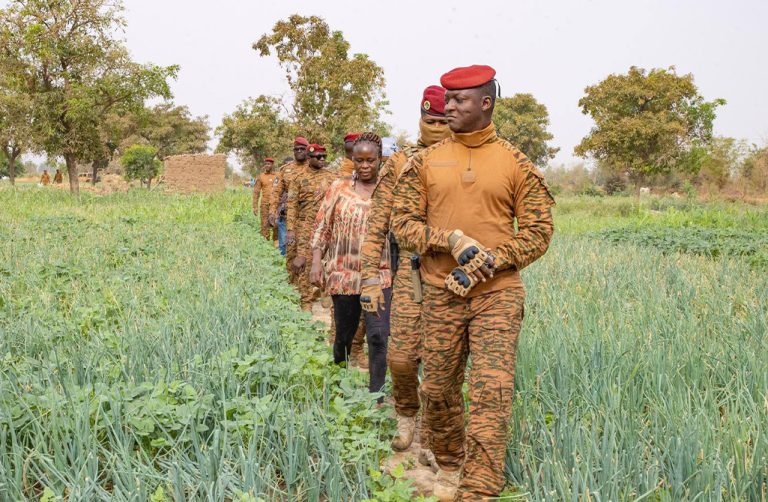
The issue of food self-sufficiency has become a strategic pillar in the political vision of the President of Burkina Faso, Captain Ibrahim Traoré. In a context marked by multiple crises—security-related, climatic, and economic—the Burkinabe government has chosen to make agriculture, livestock farming, and fishing key levers for ensuring the country’s resilience. Two major structural initiatives illustrate this commitment: the Agro-pastoral and Fisheries Offensive and the Presidential Initiative for Agriculture.
The Agro-pastoral and Fisheries Offensive is a multisectoral response launched to energize the agricultural, livestock, and fisheries sectors. This initiative aims to boost national production by mobilizing local actors, natural resources, and appropriate technologies. It has a dual goal: to meet the population’s food needs and to reduce dependency on imports.
To this end, the government has rehabilitated and developed thousands of hectares of farmland; distributed subsidized agricultural inputs (improved seeds, fertilizers, farming tools); supported livestock production by establishing vaccination parks and providing livestock feed; and developed inland fisheries through the stocking of water bodies and the training of fishermen’s cooperatives.
Through this initiative, President Traoré has aimed to rally the entire nation around the goal of food sovereignty. This exceptional, nationwide campaign is built on the deployment of tractors and other farming equipment in strategic areas. It also promotes technical and financial support for small producers and rural cooperatives.
The first agricultural campaigns under these initiatives have shown encouraging signs: increased cereal production in several regions, local reductions in food prices, and renewed hope in rural areas. Challenges remain—particularly security and climate-related—but the direction is clear.
Under the leadership of its president, Burkina Faso is taking a decisive step toward food autonomy. By combining political will, logistical support, and popular mobilization, the country is gradually paving the way toward sovereignty.