DRC-Rwanda : Towards framed mining cooperation under the aegis of the United States
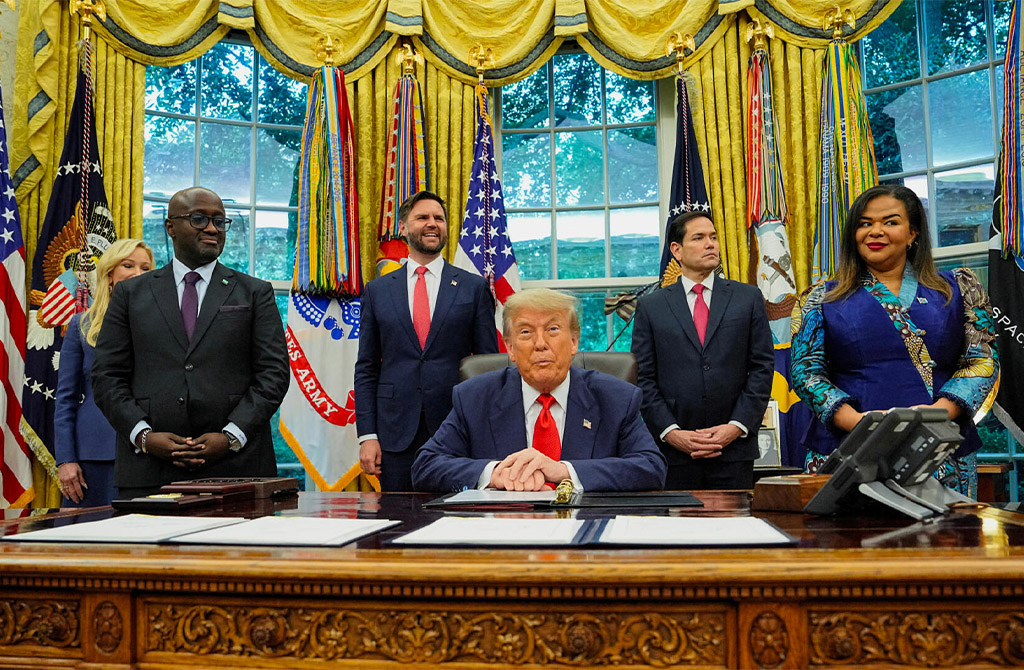
Signed on June 27 in Washington, the peace agreement between the Democratic Republic of Congo (DRC) and Rwanda marks a major diplomatic milestone, aiming to end decades of tensions. However, beyond the security concerns, the economic—particularly mining—dimension is raising numerous questions within the DRC.
The partnership, backed by the United States, seeks to strengthen economic cooperation between Kinshasa and Kigali. According to the document released by the U.S. State Department, the two countries have committed to establishing a regional economic integration framework within three months. This framework aims to structure investments around critical mineral supply chains, with the support of American investors.
The agreement mentions the creation of “transparent and formalized mining value chains” between the two countries. Yet, this approach has sparked fears in the DRC, where many see it as a potential cover for organized resource exploitation. These concerns were intensified by comments made by Massad Boulos, an advisor to Donald Trump on African affairs, suggesting that some Congolese minerals would be processed in Rwanda.
In an attempt to ease tensions, Congolese Foreign Minister Thérèse Kayikwamba Wagner clarified that the agreement “includes no economic compensation, no mining concessions, and no bilateral trade treaty with Rwanda”. In reality, the partnership could simply formalize a pre-existing illegal trade. A recent UN expert report revealed that minerals, particularly coltan, are still being illicitly extracted in North Kivu and transported to Rwanda, where they are exported as Rwandan products.
The agreement could, therefore, help improve traceability and allow Kinshasa to recoup revenues previously lost to smuggling. However, significant challenges remain, especially on the security front. Strategic mining areas in eastern DRC remain under the control of rebel groups, including the M23, with whom a parallel peace process is underway under Qatari mediation.