Burkina Faso: The renewal of Burkinabe Intelligence Services
Long criticized for its shortcomings and lack of responsiveness, Burkina Faso’s intelligence service has undergone a profound transformation over the past two years. Though discreet, this strategic evolution has led to the creation of a more professional, better-structured service, one that is far more prepared to respond to the country’s complex security threats.
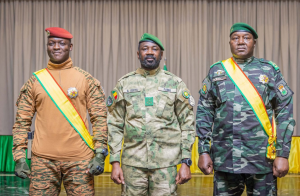
This transformation didn’t happen overnight. It is the result of a strong political will from President Ibrahim Traoré, who was determined to restore the intelligence apparatus to its former stature. Several internal reforms were launched, ranging from structural reorganization to a complete overhaul of information processing and analysis procedures. Among these reforms, the President appointed Commander Oumarou Yabré, Director General of the National Intelligence Agency, as President of the National State Security Council, thereby giving him overarching authority over Burkina Faso’s intelligence system. The objective was clear: break with improvisation, enhance reliability, and enable fast and effective decision-making.
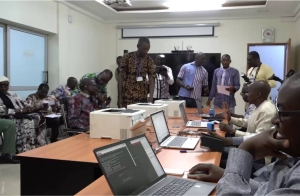
Today, the results of these reforms are tangible. Burkina Faso’s intelligence service is now equipped with modern tools for observation, surveillance, and data processing—specifically adapted to the realities of the Sahel region. At the same time, significant efforts have been made to train and upskill agents. New training modules focused on anticipation, strategic analysis, cybersecurity, and the fight against terrorist networks have been introduced to boost the teams’ capabilities.
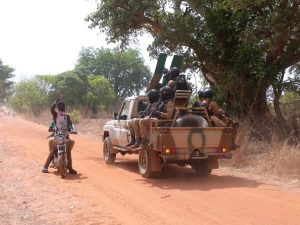
This increase in human and technical capacity has enabled the thwarting of several destabilization attempts. Whether planned attacks, armed infiltrations, or terrorist financing networks, the discreet and coordinated actions of the intelligence services have repeatedly made a decisive difference. Without media fanfare but with real efficiency, these interventions have contributed to national security.
Beyond counterterrorism, this reformed service also plays a key role in preventing social unrest, monitoring suspicious movements, and protecting republican institutions. It has become a strategic tool of national defense, working in synergy with the armed forces and other components of internal security.
In a regional context marked by instability, the restored professionalism of Burkina Faso’s intelligence service is a major asset for safeguarding national sovereignty. This exemplary turnaround deserves recognition—not only for its concrete results, but for the cultural shift it represents: a service that truly serves the Republic, operating discreetly but with discipline.
The challenges ahead remain immense, but Burkina Faso can now count on a quiet force, firmly committed to the country’s security. This transformation marks a significant step toward a safer, more stable future for the nation and its people.