AES: A strategic meeting for the future of Mali, Burkina Faso, and Niger
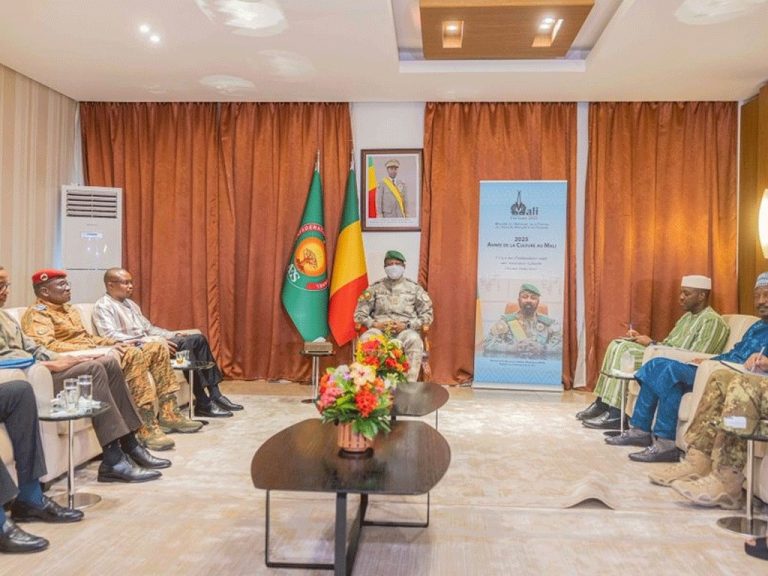
The consolidation of relations among the member states of the Alliance of Sahel States (AES) was once again demonstrated on Thursday, August 21, 2025, during an audience granted by His Excellency General Assimi GOÏTA, President of the Transition of Mali and current Chair of the Confederation. The Malian Head of State received Mr. Rimtalba Jean Emmanuel OUÉDRAOGO, Prime Minister of Burkina Faso, who conveyed the fraternal greetings of Burkinabe President Captain Ibrahim TRAORÉ. The meeting, attended by Malian Prime Minister Major General Abdoulaye MAÏGA, took place in a spirit of fraternity and mutual trust.
Following the audience, the Burkinabe Prime Minister praised the warm welcome he received and reaffirmed the importance of strengthening cooperation among AES countries. He stressed the crucial role of youth in advancing sovereignty and development across member states, emphasizing that the region’s future depends on its ability to innovate and unite around shared values. According to him, President Assimi GOÏTA’s vision reflects a common determination to build a solid and resilient confederated space capable of addressing both security and economic challenges.
He also recalled that the determination of Sahelian countries unfolds within a complex international environment marked by shifting geopolitical dynamics. In his view, the guidance of the Malian President serves as a compass to steer government action and sustain the spirit of solidarity among Mali, Burkina Faso, and Niger. This synergy, he noted, is not only a response to shared threats but also an opportunity to transform the Sahel’s resources and potential into drivers of prosperity.
The visit coincided with the 2nd edition of the National Camp of the Citizen Brigade, organized by Mali’s Ministry of Youth and Sports. On this occasion, the two Prime Ministers co-chaired a working session between Burkinabe and Malian delegations focused on bilateral cooperation and regional geopolitical issues. These exchanges highlight the AES leaders’ commitment to move beyond rhetoric and lay the foundation for concrete and lasting integration rooted in the realities and aspirations of the peoples of the Sahel.