Cameroon: Towards transparent electricity billing for public buildings
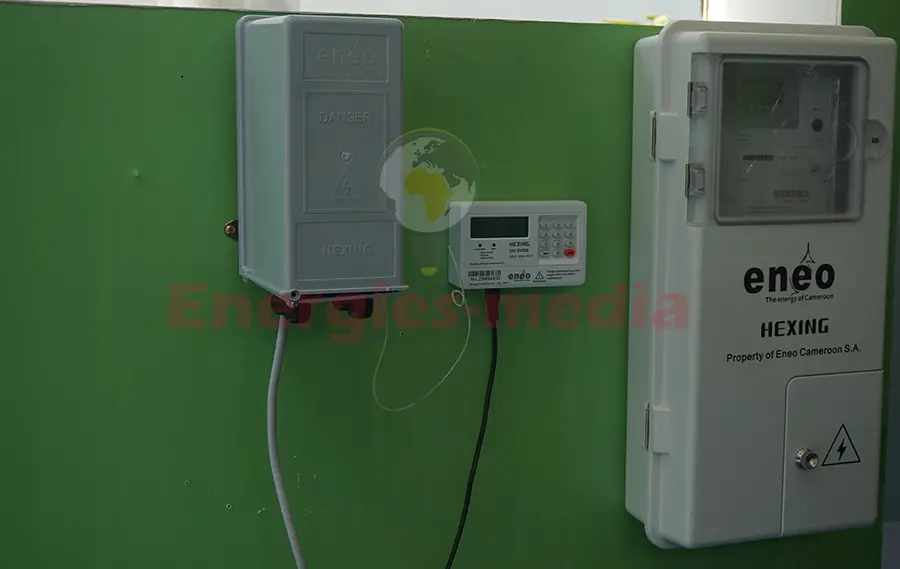
Cameroon is decisively embarking on a path to modernize and bring transparency to its energy management. Proof of this is the announcement made in late November 2025 by the Minister of Water and Energy, Gaston Eloundou Essomba, before the Finance Committee of the National Assembly. Starting in 2026, 20,000 new electricity meters will be installed on administrative buildings and public lighting networks across the country.
This measure, integrated into the 2026 budget of the ministerial department, addresses a long-standing problem: recurring disputes between the Cameroonian state and Eneo, the national electricity distributor.
Public entities frequently contest their bills, citing alleged overcharging. “Indeed, this is to put an end to the discrepancies that have often arisen between state entities and Eneo over billing,” confirms an internal source at the company.
The initiative aims to ensure accurate and reliable measurement of the state’s electricity consumption.
Replacing and installing these 20,000 meters, a portion of which will be “smart” meters, will allow for precise and shared reading of consumption indexes.
This technical transparency will significantly reduce the scope for dispute, as the data will be accessible and verifiable by both parties, establishing an indisputable factual basis for billing.
The impact of this project is particularly structural for the management of public lighting. Currently, billing for this service still relies heavily on estimates, a potential source of inaccuracies and disagreements.
The deployment of dedicated meters will, for the first time, provide a clear and fair view of the actual consumption of this essential service, enabling more precise budgeting and better maintenance planning.
This government decision is commendable for several reasons. It introduces managerial rigor and a data-driven culture into public energy spending, contributing to a more efficient use of state funds.
By clarifying the financial relationship with its partner Eneo, it resolves a chronic dispute and fosters a more serene and cooperative business climate, beneficial to the energy sector as a whole.
Finally, beyond mere accounting management, this project lays the technical groundwork for a broader modernization of the grid. Smart meters constitute the basic infrastructure for developing more connected cities and more optimized energy management in the future.
Through this concrete measure, Cameroon thus demonstrates its commitment to streamlining its processes and investing in modern tools for a more effective and transparent administration.
Eric Nzeuhlong