Burkina Faso: 2025, a year of proactive resilience focused on results
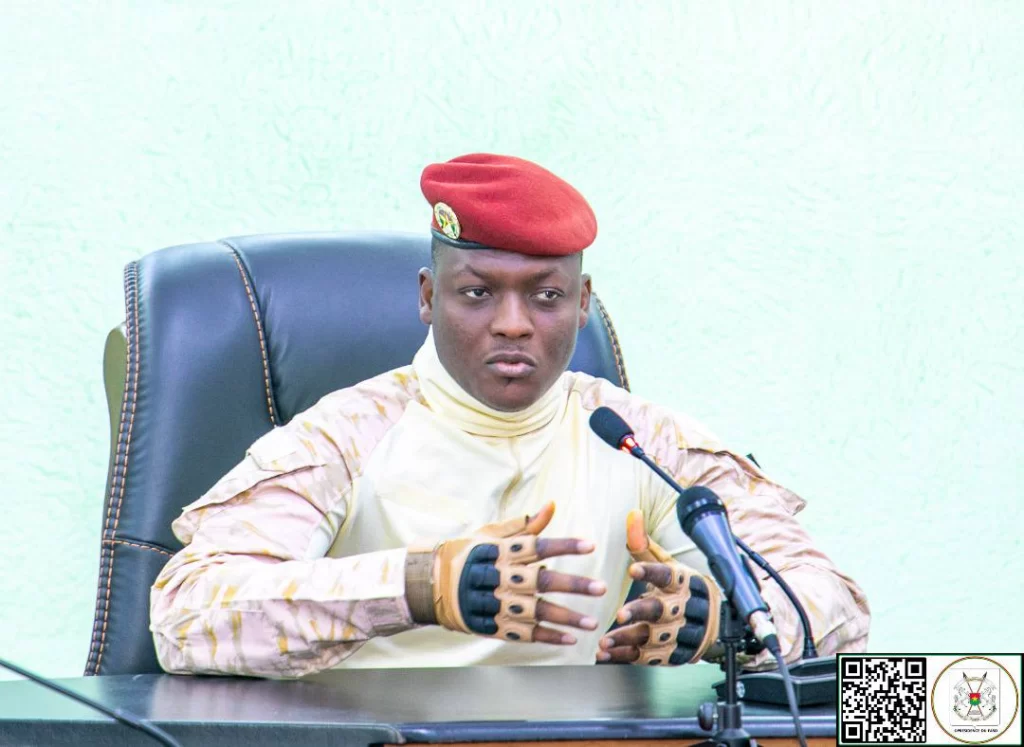
In 2025, Burkina Faso demonstrated exemplary resilience in the face of internal and external challenges, forging a path of progress amidst security and geopolitical turbulence. Under the firm leadership of Captain Ibrahim Traoré, the Burkinabe state transformed crises into structural opportunities, affirming its independence and capacity to rebound.
Economically, the year saw an acceleration of structural reforms. Confronting persistent regional and international constraints, Ouagadougou deepened its policy of strategic self-sufficiency.
Public investment focused on key agriculture and energy sectors, with a clear goal: to reduce vulnerability to external shocks.
The push for consumption of local products translated into strong incentives for national processing industries, moving beyond awareness campaigns.
This economic resilience was built through rigorous financial management, optimizing domestic resources amid budgetary pressures.
The state prioritized basic infrastructure connecting territories and securing economic corridors, viewed as the backbone of development and social cohesion.
Politically, the resilience of Burkina Faso was expressed through a consolidation of its institutional framework and an ongoing pursuit of internal unity.
The year saw continued and deepened civic and patriotic mobilization, channeled to support national defense efforts and the foundational reform project.
Emphasis was placed on strengthening the presence and effectiveness of public administration across the entire territory a key pillar for restoring trust and state primacy.
Internationally, Burkina Faso displayed notable diplomatic resilience. It maintained, even hardened, its posture of sovereign reaffirmation, choosing partnerships deemed more balanced and rejecting conditionalities perceived as hindering its strategic choices.
This stance, upheld despite pressure, constitutes the political expression of a will to resist external influence and define its own path.
Ultimately, the hallmark of Burkina Faso’s resilience in 2025 was its fundamentally offensive, not defensive, nature.
It was not merely about absorbing shocks, but using them as catalysts to rethink its governance and development model.
This approach involved difficult and deliberate choices, often disruptive to inherited frameworks.
The state bet on internal mobilization as its principal capital, attempting to convert a multidimensional crisis into an opportunity for reinvention.
The past year thus appears as a crucial step in the laborious and contested construction of a new national trajectory, where the capacity to resist, adapt, and act autonomously is upheld as a fundamental principle of public action.
Cédric KABORE