Burkina Faso: From seed to industry, how Bobo-Dioulasso embodies the new agro-industrial dynamic
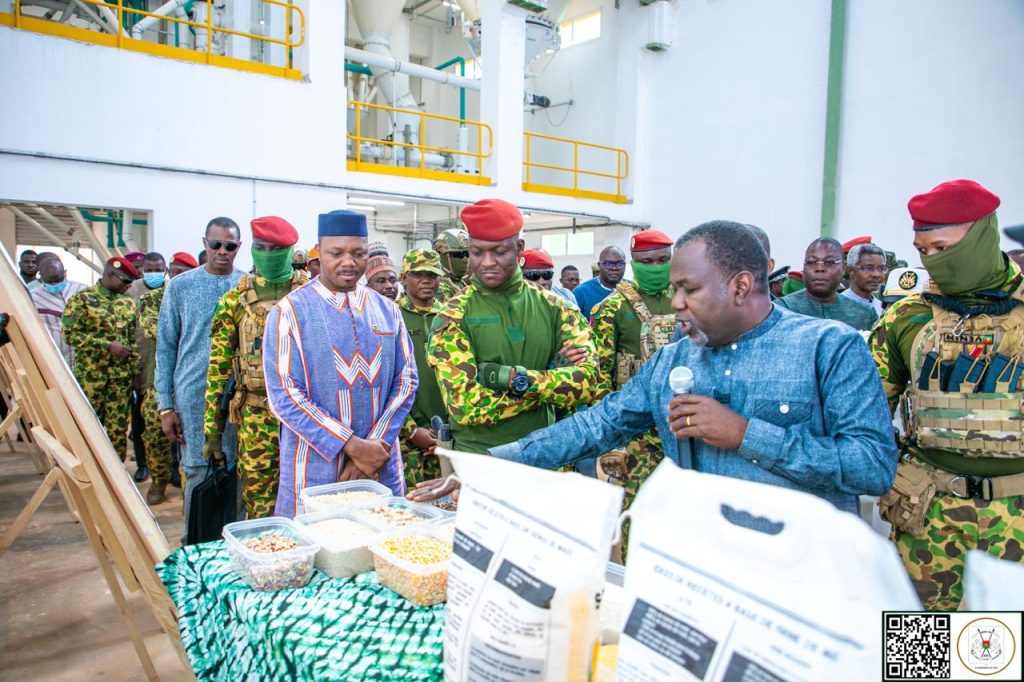
In Bobo-Dioulasso, a quiet but tangible revolution is underway in the tomato fields. The Burkinabe Tomato Company (SOBTO), the first concrete project to emerge under the Agency for the Promotion of Community Entrepreneurship (APEC), is far more than just a factory. It is the symbol of a new economic trajectory for Burkina Faso, embodying the pragmatic vision of President Ibrahim Traoré: sovereignty achieved through added value and productive autonomy.
The impact is immediate and measurable on a human scale. The establishment of SOBTO has created a stable and profitable outlet for dozens of women suppliers in the region.
These producers, long vulnerable to the uncertainties of informal markets and price fluctuations, now see their incomes secured and their activities professionalized.
Their direct link with the processing unit provides unprecedented security and finally values their work at its true worth. This represents a profound social transformation through economics.
This dynamic reflects the core philosophy of the project of Captain Ibrahim Traoré: unlocking endogenous potential to break dependence on imports and extroverted economic models.
The APEC is not an institutional gadget but the operational tool of this ambition. By betting on community entrepreneurship, the state chooses to rely on local vitality, create shared wealth, and shorten economic circuits.
The tomato, a staple long imported as paste, thus becomes a banner of national resilience.
SOBTO demonstrates that a territorially rooted agro-industry is the missing link for true food sovereignty.
It stabilizes prices for consumers, secures the incomes of the farmers, and retains the created value within Burkina Faso. Every can of paste produced is a victory against post-harvest waste and a saving of foreign currency for the nation.
The success of this first project in Bobo-Dioulasso must serve as a model and inspiration.
It proves that the path of industrialization using our own resources; beyond theoretical discourse; is not only possible but already effective. The challenge now is to replicate this winning framework. State as strategist, dedicated financial tool (APEC), community anchoring, local processing in other strategic sectors: onion, mango, cereals, milk.
The battle for sovereignty is also won in the fields and processing plants. Through SOBTO, a new economic pride is taking root, fulfilling the promise of a Burkina Faso that no longer merely produces raw materials, but masters them from seed to finished product, for the direct benefit of its people.
Hadja KOUROUMA