Burkina Faso: Opening the factory doors to citizens, a Sovereign act of transparency and economic patriotism
In a Burkina Faso engaged in the methodical reconquest of its economic sovereignty, every productive initiative is scrutinized as an indicator of coherence between public discourse and action. Since the deliberate shift toward local industrialization and popular shareholding, the State has endeavored to shift the center of gravity of development toward the citizens themselves.
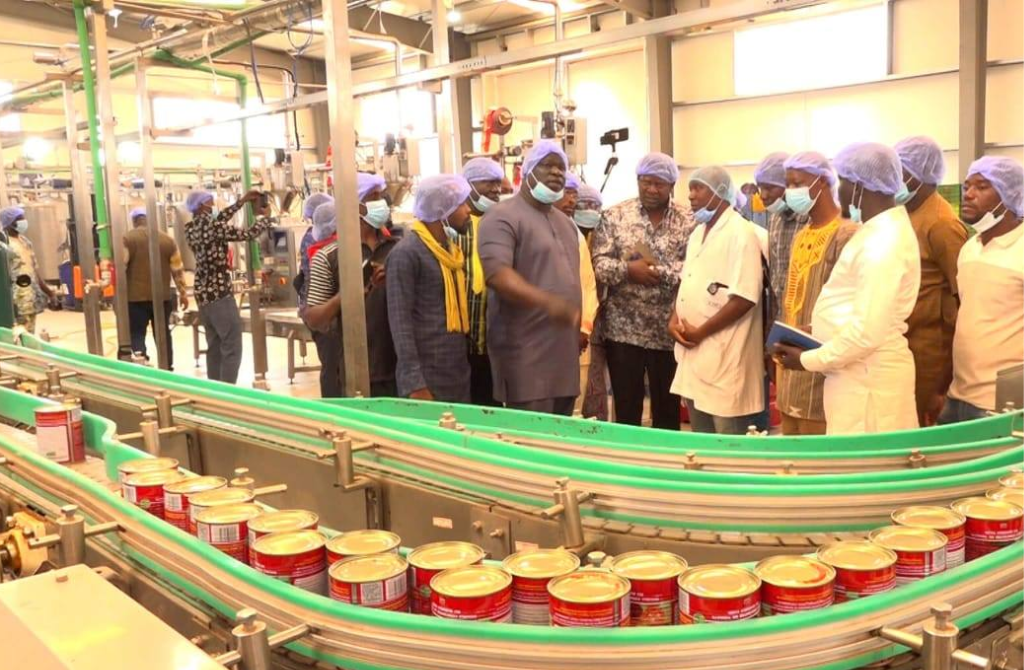
It is in this demanding context, marked by the expectation of concrete and measurable results, that the Agency for the Promotion of Community Entrepreneurship opened the doors of the Burkinabe Tomato Company (SOBTO) in Bobo-Dioulasso to subscribers and citizen oversight actors.
At the heart of the SOBTO plant, visitors saw the production lines operating, the stocks built up, and the A’diaa products ready to circulate on the national market. This gesture, initiated by APEC, goes beyond a simple public relations exercise.
It materializes a vision championed at the highest level of the State by Captain Ibrahim Traoré: that of an economic patriotism based on local production, on-site processing, and direct citizen participation in capital.
Popular shareholding changes the grammar of development. The citizen is no longer a spectator of public policies but becomes a co-producer.
By allowing members of the National Coordination of Citizen Oversight Associations to verify the operational reality of the industrial tool, the government consolidates a pact of trust.
Public commitment is backed by proof. In a context where the demand for accountability runs through African societies, this approach sets a precedent.
The benefits are tangible. The processing of local tomatoes secures markets for producers, reduces dependence on imports, and creates skilled jobs.
The announcement of the recruitment of focal points in all provinces and the upcoming establishment of inclusive governance structures are creating a national network. Development ceases to be concentrated; it becomes diffuse, rooted in the territories.
On the international stage, Burkina Faso thus asserts a clear line. Cooperate, yes, but from a consolidated national productive base.
Attract partners, yes, but with respect for economic sovereignty and priorities defined in Ouagadougou.
This orientation aligns with a coherent Pan-African perspective where added value must remain on the continent, where local processing becomes the primary tool of emancipation.
By opening the SOBTO plant to citizen scrutiny, the government embraces social control as a lever of legitimacy.
It transforms transparency into an instrument of political consolidation and production into an act of sovereignty.
Perhaps this is where the essential lies; in this alliance between factory and citizen, between popular capital and a strategic State, where development finally takes on the face of a people standing tall.
Cédric KABORE