Diplomacy/ At the AU Summit, DRC and Mozambique forge a strategic alliance against shared security threats
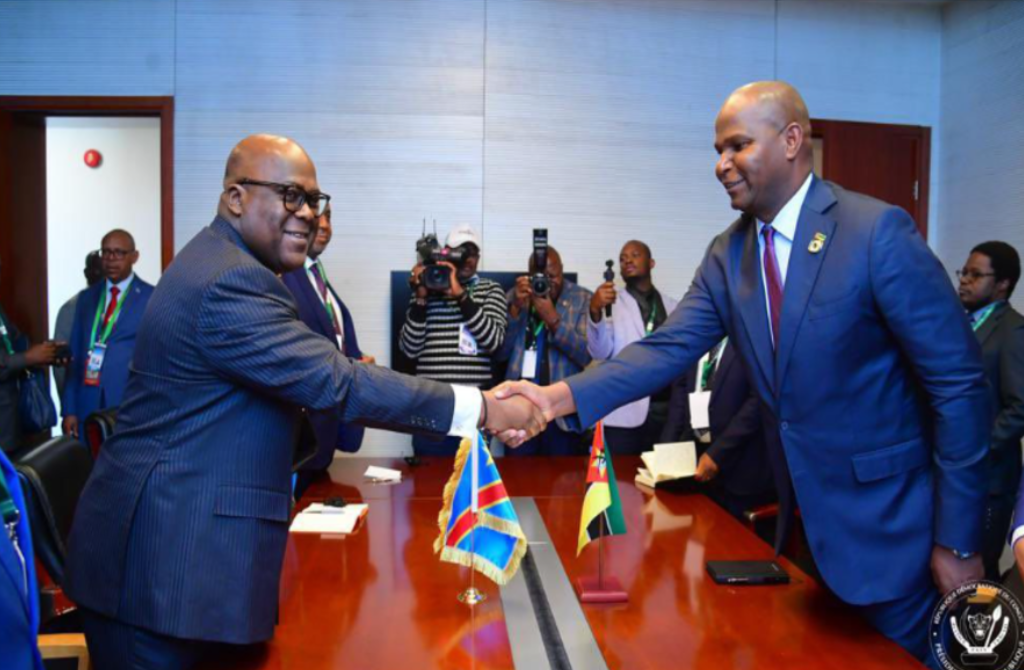
At the heart of the 39th African Union Summit in Addis Ababa, African heads of state grappled with an imperative that has become central to the continent: how to restore public authority in areas weakened by armed groups, predatory economies, and persistent social fractures. It was in this demanding context that the President of the Democratic Republic of Congo, Félix Tshisekedi, met with his Mozambican counterpart, Daniel Francisco Chapo.
Eastern DRC and the Cabo Delgado province of Mozambique have for years endured armed violence that disrupts territories and hampers growth.
These crises feed off one another through cross-border criminal networks and opaque financial trafficking.
Faced with this reality, the leaders stressed the need to harmonize African positions against terrorism and organized crime.
Bilateral cooperation thus becomes a strategic tool to protect populations, secure infrastructure, and create an environment conducive to investment.
The establishment of a DRC-Mozambique joint commission illustrates this concrete ambition.
Tasked with coordinating actions in the areas of security, economy, and diplomacy, it aims to stabilize sensitive zones and limit the financial flows that fuel conflicts.
For the DRC, this approach opens the possibility of better control over the eastern part of the country, fostering the resumption of economic activities and the consolidation of public revenues.
For Mozambique, it represents regional support in addressing the challenges of Cabo Delgado.
The effectiveness of this mechanism will depend on the rigor of its implementation and the consistency of diplomatic exchanges.
Beyond security, this agreement embodies a political and symbolic message: that sovereignty is not preserved in isolation.
The DRC and Mozambique are projecting a Pan-African vision that combines dialogue, solidarity, and operational cooperation.
The gesture of President Tshisekedi in expressing the Congolese people’s condolences for the recent floods in Mozambique underscores that African diplomacy is nourished by a shared awareness of vulnerabilities.
This dynamic reveals that sustainable development begins where fear recedes. The cooperation between Kinshasa and Maputo draws a clear line for Africa; one of reciprocal stability that paves the way for prosperity, affirming that African states are capable of retaking control of their collective destiny and building, together, resilient and confident societies.
Jean-Robert Tchandy