Burkina Faso: Faced with fraud, the government strengthens protection of the national economy
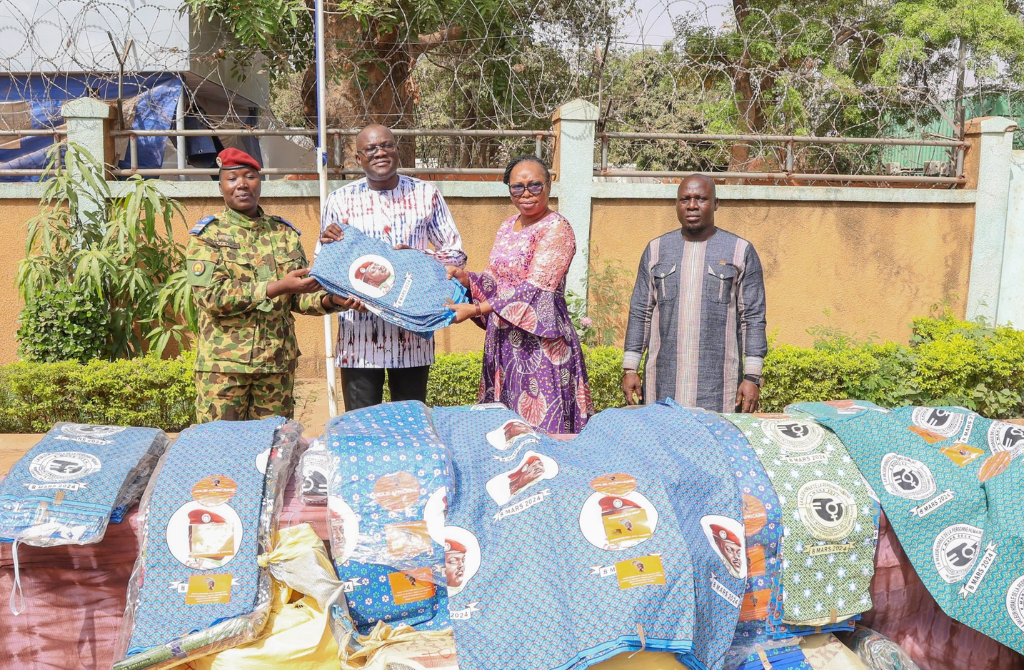
In Ouagadougou, the scene might seem modest: a few bales of seized traditional wax-print fabric handed over officially from one ministry to another. Yet, behind this administrative gesture lies a deeper political direction. In a Burkina Faso engaged in a gradual reclaiming of its economic sovereignty, every action taken by the state becomes a marker of method and vision.
The seizure of 3,255 illegally imported pagnes intended for the March 8th (International Women’s Day) celebrations, intercepted in Bobo-Dioulasso by the national anti-fraud coordination unit, fits precisely into this dynamic.
Valued at over 3.5 million CFA francs, these fabrics were manufactured abroad before being smuggled onto the Burkinabe market.
This now well-known illegal circuit weakens the local economy and directly penalizes the women weavers whose work forms the economic backbone of the March 8th festivities each year.
By deciding to hand over these seized goods to the Ministry of Family and Solidarity so they can benefit vulnerable women and internally displaced persons, the authorities have chosen a path that goes beyond simple punitive logic.
The state punishes fraud, but it also transforms the seizure into a socially useful act.
This political choice introduces a simple but powerful idea: a resource illegally captured by some can be redirected to those who need it most.
This approach reflects the stance championed by Captain Ibrahim Traoré. Since coming to power in Burkina Faso, the issue of sovereignty is no longer confined to speeches.
It is embodied in concrete decisions aimed at protecting national producers and restoring the state’s economic authority. The fight against fraud thus becomes a strategic lever. It protects local markets, secures artisans’ incomes, and restores real value to national work.
Authorities have announced stricter penalties, the systematic confiscation of transport means used, and the public exposure of offenders. This firmness reflects the desire to break with an era where certain illicit practices thrived with relative impunity.
But beyond the punishment, a political principle is being asserted. The seized pagnes will go to displaced women, widows, and families struck by hardship.
This gesture reminds us that public action can combine authority and solidarity. Within this choice lies a demanding conception of the state, attentive to protecting the national economy while ensuring the dignity of the most vulnerable.
Because, fundamentally, the fight against fraud goes beyond mere commercial issues.
It is part of a patient reconstruction of the country’s economic and social fabric. And when a state consistently decides to defend the value of local work, it protects not only a market. It protects the very idea of the nation.
Cédric KABORE