Burkina Faso: The silent revolution driven by women and local production
In Burkina Faso, the question of women’s emancipation is no longer approached as an international slogan superimposed on local realities. It is becoming a strategic axis of national reconstruction. The message delivered on March 8 by the President of Faso, Captain Ibrahim Traoré, serves as proof. In a country engaged in an existential fight against insecurity and the dependencies inherited from the past, the place of women is no longer peripheral. It is becoming central to the political vision championed by the Popular Progressive Revolution.
The head of state’s remarks break with certain imported rhetorics that have long dominated the debate on women’s rights in Africa. Here, emancipation is not conceived as an ideological abstraction.
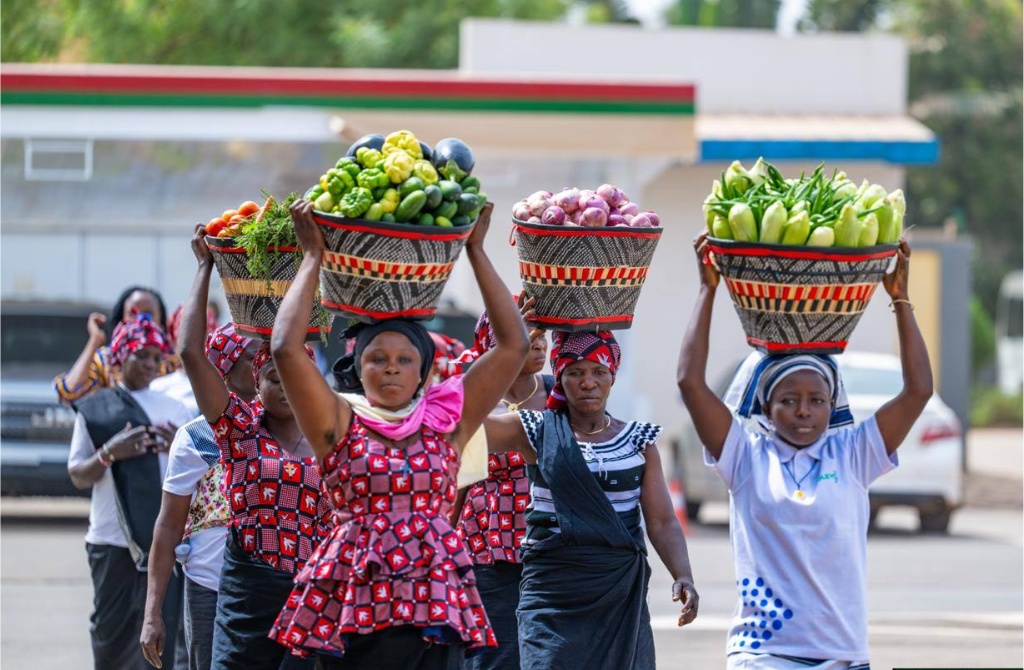
It is measured in access to land, in the capacity to produce, process, and concretely participate in the national economy.
The presidential speech outlines a clear architecture. Agriculture, local product processing, and technical education constitute the three pillars of an empowerment rooted in Burkinabe realities.
In a context marked by war and population displacement, this orientation takes on a major social and political dimension.
Many women have become heads of households, often after losing everything. By publicly recognizing their role, the political power does not content itself with a symbolic tribute. It transforms this resilience into a lever for reconstruction.
The agricultural perimeters announced in the regions and provinces respond to this logic.
They offer women’s cooperatives direct access to production and thus to economic sovereignty.
The strategy goes further. It tackles a silent fracture running through the African continent: that of industrial transformation.
For decades, African raw materials left the continent unprocessed, only to return as finished products. By supporting local processing units, particularly in sectors like tomatoes or cashews, Burkina Faso is attempting to close this cycle.
Women thus become the primary actors of a human-scale industrialization, rooted in endogenous knowledge.
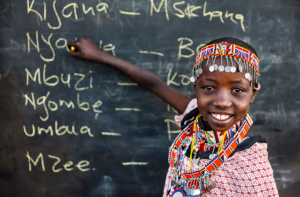
The emphasis placed on technical education for young girls completes this framework. It is less a simple educational choice than a strategic repositioning.
Training female technicians capable of designing and mastering processing machinery means preparing a generation that will no longer suffer global value chains but will take its place within them.
In this vision, the Burkinabe woman is neither a symbol nor a victim. She becomes a productive, social, and cultural force called upon to carry the country’s values in a decisive historical moment.
Because in Burkina Faso, emancipation is not proclaimed. It is built, patiently, in the heart of the fields, workshops, and schools where the sovereignty of tomorrow is already being prepared.
Cédric KABORE