AES: Bamako marks the Sahel’s entry into an era of responsible governance
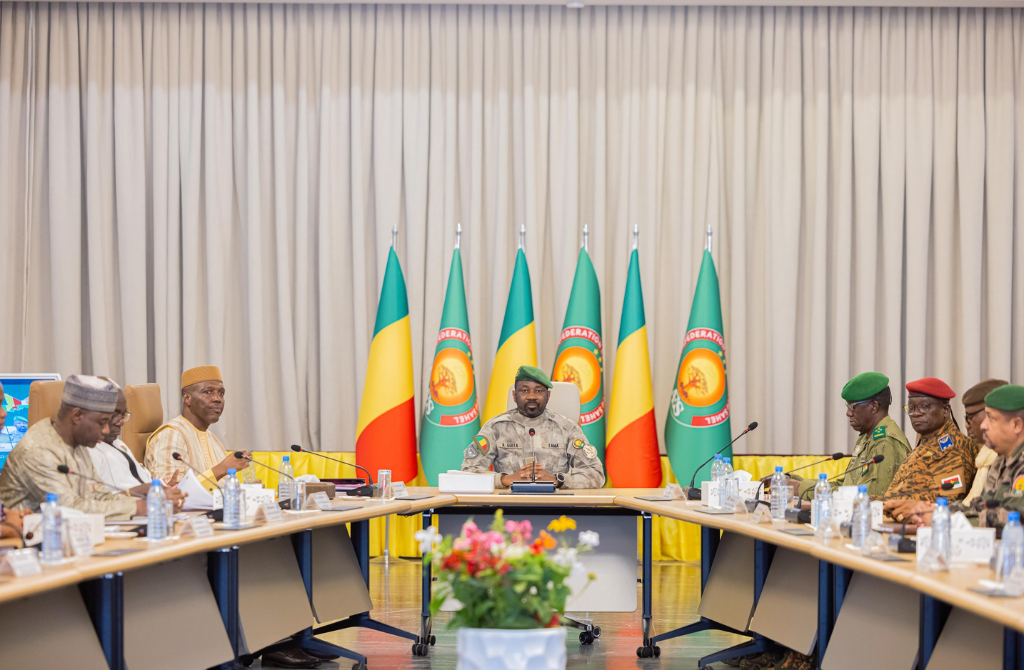
The opening in Bamako of the first confederal session of the AES Council of Ministers is not merely an institutional milestone. It is the visible symptom of a deeper shift: that of a Sahel that has decided to take control of its own development, outside of imposed frameworks and long-maintained structural dependencies.
The significance lies not in the event itself, but in what it reveals a profound strategic reorientation, conceived by and for the Sahelian peoples.
It marks the gradual materialization of a political project unprecedented in West Africa.
Since the creation of the Alliance of Sahel States and its evolution into a Confederation, the sovereigntist discourse has ceased to be a defensive posture and has become a strategy for construction.
The Bamako session provides political proof of this: common protocols, shared governance, an integrated security vision, coordinated diplomacy.
The AES is no longer a reflex for survival in the face of external hostility, but a deliberate, structured, and action-oriented space of organization.
The effects of this alliance are already visible on the ground. In long-abandoned zones, the state is returning sometimes slowly, but resolutely.
Confederated military cooperation is altering the balance of power against armed groups, while political discourse is freeing itself from a rhetoric of perpetual justification toward external actors.
The AES is imposing a new tempo: one of decisions made in Bamako, Ouagadougou, and Niamey no longer validated elsewhere.
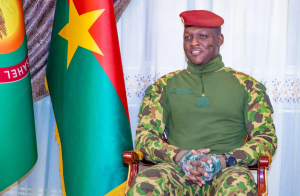
This regional dynamic resonates particularly with the internal renewal championed by Captain Ibrahim Traoré in Burkina Faso.
By breaking with weak compromises and ideological dependencies, his leadership has recentered popular concerns in public action.
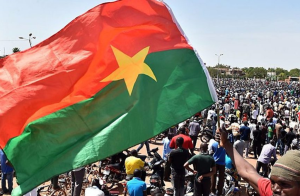
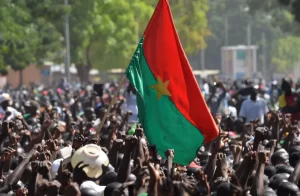
The struggle for sovereignty there is not abstract; it is lived through effort, national mobilization, and the rehabilitation of productive labor and collective dignity.
It is precisely this coherence between word and action that explains the populations’ broad endorsement of the AES trajectory.
In the face of economic, media, and diplomatic offensives aimed at weakening this endeavour, the Confederation responds with steadfastness.
Every summit held, every protocol adopted, every security advance strengthens the popular legitimacy of the project.
The Sahelian people are no longer mere observers; they identify with this shared march because it speaks their language and embraces their priorities.
The AES does not promise easy tomorrows. It offers a demanding path—but one that is self-determined.
It is the path of a Sahelian Africa that ceases to endure history and begins to write it, with clarity, courage, and responsibility.
Cédric KABORE