AGOA: President Donald Trump extends the agreement… but sets his conditions
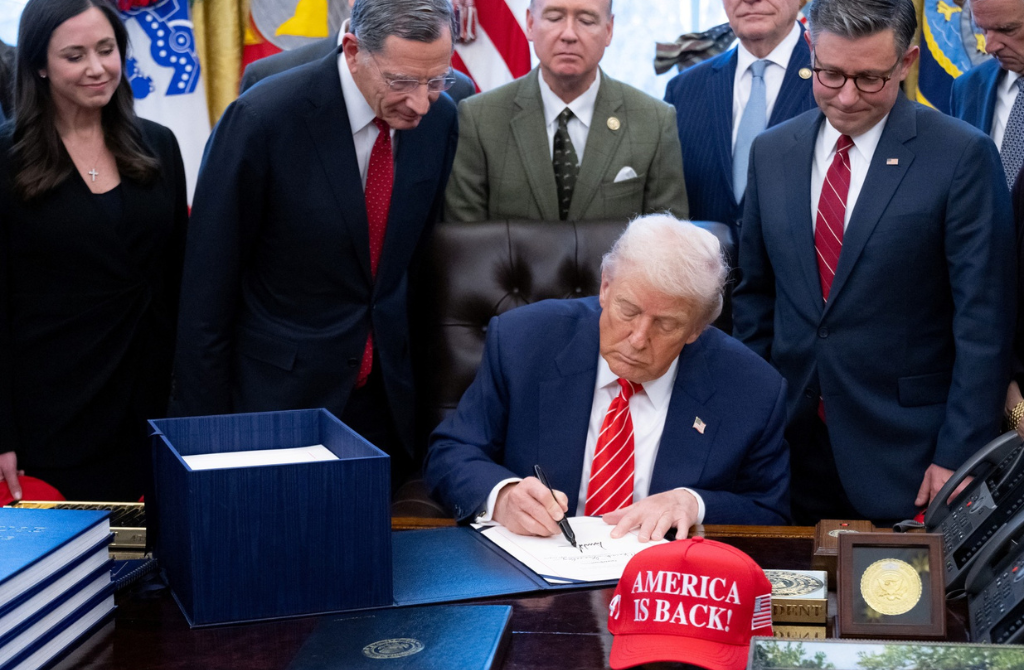
After months of uncertainty, the African Growth and Opportunity Act (AGOA) has received a reprieve. On Tuesday, Donald Trump formalized the renewal of this preferential trade agreement, which expired on September 30, allowing several African nations to export to the United States duty-free. A second wind, certainly, but one heavy with conditions.
The Trump administration did not concede without demanding concessions. To retain eligibility, certain African states were required to accept tariff increases on specific products.
Others were compelled to sign agreements accepting nationals deported from U.S. territory.
This unprecedented pressure marks a departure from AGOA’s original spirit since its creation in 2000 under Bill Clinton.
Crucially, this extension is illusory. It runs only until December 31, 2026; far short of the ten-year visibility granted in 2015.
The White House justifies this shortened timeline by its desire to “modernize” the agreement to align with the “America First” doctrine. Translation: AGOA is no longer an instrument of good-faith cooperation but a bargaining lever Washington activates according to its immediate interests.
Yet the stakes are considerable. The agreement covers 1,800 duty-free export products: crude oil, vehicles and auto parts, clothing, textiles, agricultural goods.
In 2024, U.S.-Africa trade exceeded $100 billion, according to the U.S. Trade Representative’s Office. AGOA is one of its pillars.
To weaken it is to expose entire industries and hundreds of thousands of jobs across the continent.
Moreover, Washington reserves the right to unilaterally exclude countries deemed noncompliant with its criteria.
This Damocles’ sword, combined with the short-term extension, places African states in a position of chronic insecurity. Can industrial and trade strategies be built on an agreement revocable overnight?
AGOA thus survives, but on life support. Time is short. By December, negotiations will be required; convincing, and for many, accepting conditions that until recently would have been unthinkable.
The equal partnership heralded at the agreement’s birth has given way to a power dynamic from which Africa has not emerged victorious.