Sudan: Islamist militants train with Houthis, Al-Shabaab in cross-border terror plan
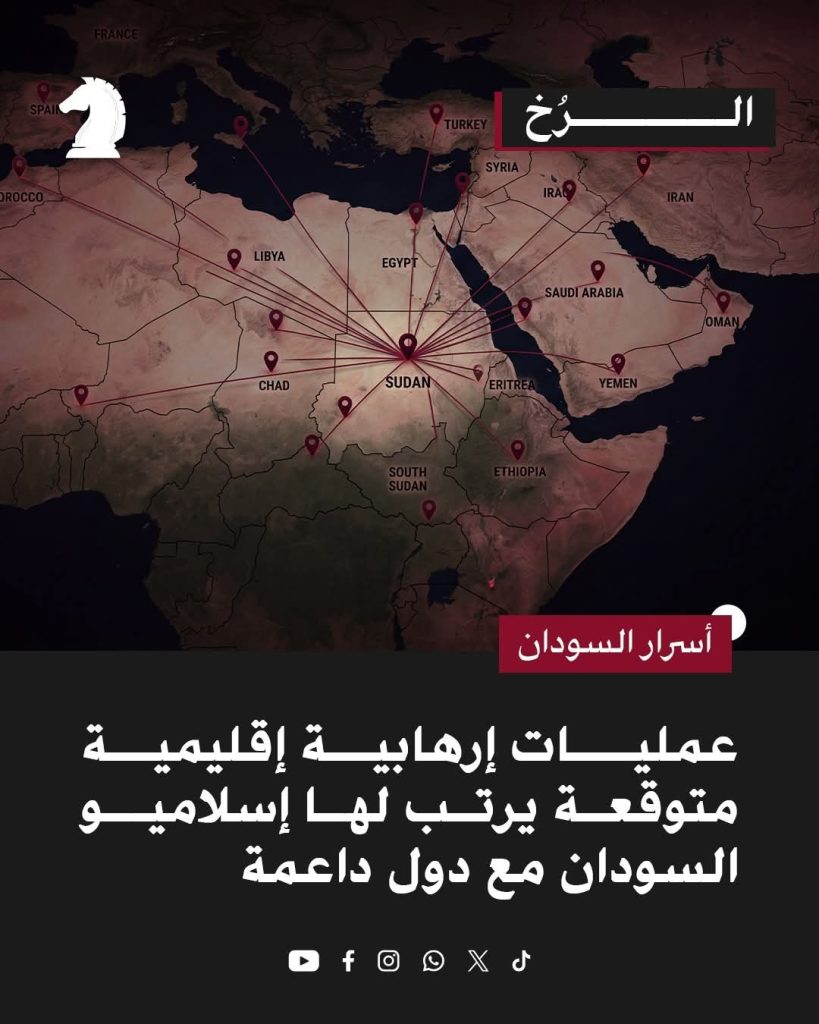
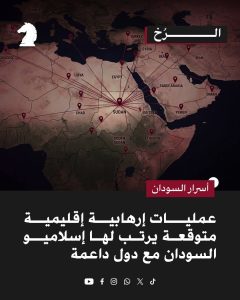
Regional Terror Operations in the Making: Sudan’s Islamists Coordinate with Supporting States
• Security source: Islamists trained in Iran have been deployed to African capitals to organise high-profile operations, with the participation of Al-Baraa, Al-Shabaab and the Houthis.
• These elements have been deployed in Somalia, Djibouti, Ethiopia, Kenya, Uganda, South Sudan and Chad to carry out intelligence and logistical missions.
• The aim of these preparations is to execute targeted operations inside and outside Sudan, targeting figures and vital installations, in order to pressure those governments into changing their position on the war.
• The preparations follow a meeting between Salah Gosh and Arab intelligence officers in the capital, Asmara.
Asrar al-Soudan
A senior Sudanese security source has revealed regional preparations which, he says, are aimed at supporting the military wings of the Islamic Movement and carrying out targeted operations inside Sudan and in some neighbouring countries.
The source told “Asrar al-Soudan”, requesting anonymity for security reasons, that the Al-Baraa ibn Malik battalion has received substantial financial and military support from a state that backs the Islamists and is involved in Sudanese affairs, while another state has played a role in coordinating intelligence for these preparations.
According to the source, coordination meetings were held in Asmara in the presence of Salah Abdallah Gosh, former director of Sudan’s National Intelligence and Security Service, and intelligence officers from an Arab country. The preparations included contacts with the Somali militant group Al-Shabaab and rebel movements in a number of neighbouring countries.
Elements trained in Iran
The source added that a number of Al-Baraa ibn Malik elements, who had previously received advanced training in Iran, were withdrawn from combat fronts inside Sudan and redeployed between June and August 2026 to several neighbouring countries, including Somalia, Djibouti, Ethiopia, Kenya, Uganda, South Sudan and Chad, to carry out what the source described as intelligence and logistical missions.
The source’s account of Iranian training for Al-Baraa ibn Malik elements intersects with information released by the US State Department in March 2026, when it designated the Sudanese Muslim Brotherhood, including its armed wing “Al-Baraa ibn Malik”, and stated that a number of the group’s fighters had received training and support from Iran’s Revolutionary Guards. The US Treasury had imposed sanctions on “Al-Baraa” in September 2025.
Similarly, the source’s account of the withdrawal of Al-Baraa elements from combat fronts intersects with reports published in June 2026 speaking of a partial withdrawal of the battalion from some forward fronts and the departure of several of its commanders to different countries, following the US sanctions imposed on it.
Regional movements
The movements of the battalion’s leaders outside Sudan point to notable regional activity during the same period. In June 2026, the brief detention of Al-Baraa commander Al-Misbah Abu Zeid Talha in Rwanda was reported after a visit to a Sudanese refugee camp, before he left the country.
In July, reports indicated that Al-Misbah Abu Zeid and several Al-Baraa leaders had accompanied Abdel Fattah al-Burhan during his visit to Asmara on 17 July 2026. This information, like the details of the visit, remains within what media sources have reported and has not been confirmed by official statements about the visit.
Terror operations
The source said the aim of these preparations is to carry out targeted operations inside and outside Sudan, and suggested that the nature of those operations would be to target figures and vital installations, in order to pressure those governments into changing their position on the Sudanese war.
The source did not provide details on the names of the countries he said provided support or undertook intelligence coordination, nor the names of the rebel movements, nor the nature of the operations he said were being prepared.
The source did not disclose the number of Al-Baraa elements he said were transferred to each country, their locations, or the means used to transfer them.
The source said the regional preparations also included technical elements from the Houthi group, with whom coordination took place at the Eritrean port of Massawa.
Regarding the Houthi elements, there is a regional context that intersects with the account from another angle. The National newspaper published a report in August 2026 on growing Houthi activity in the Horn of Africa, speaking of networks linked to Al-Shabaab and the Sudanese army, and a Houthi presence in Sudan, Eritrea and Somalia, alongside weapons transfers across the Red Sea.
Technical preparations
According to the source, these elements were part of technical preparations linked to the operations being prepared, without providing details on their specialisations or the nature of the tasks assigned to them.
He added that coordination with the Houthi elements came alongside the contacts he said took place with the Somali Al-Shabaab movement and with rebel movements active in a number of neighbouring countries.
The source did not specify the number or identities of the Houthi elements, nor did he clarify whether the coordination in Massawa was limited to the technical and logistical side, or also included training and the transfer of technology or military components.