Nairobi’s new robot-run restaurant creates buzz
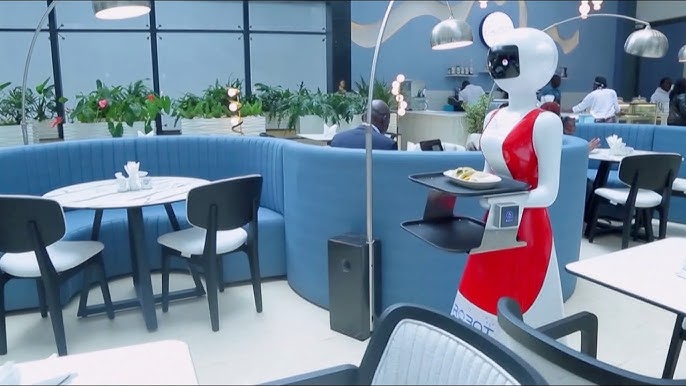
At a newly opened restaurant in Nairobi, two robotic waiters, named Nadia and Claire, are causing quite a stir. The pair have quickly become the talk of the town, effortlessly navigating between tables to deliver orders in the two-month-old eatery.
“When we get swamped, especially on weekends, we’ve got ten human waiters on the floor alongside three robots. These robots are more than just machines; they’re part of the team, each with a name, and their service is impeccable,” explains waitress Gladys Guda.
Diners access the menu via a QR code and place their orders online. Once the food is ready, a human waiter places the dishes on a robot’s tray after a bell signals the completion.
The robots, with a few taps on an iPad, then bring the food to the correct table.
The robots, which operate under a centralized control system using specialized software, are recharged overnight after their shifts.
Though robotic servers are not new in countries like China, Japan, and the United States, this is an exciting novelty for many in East Africa.
The restaurant has garnered significant attention recently, with patrons showing great enthusiasm for the innovative dining experience.
“For me, it’s something new and exciting because I’ve never seen a restaurant like this in Kenya. It’s a brilliant idea from the owner,” says diner Packson Chege.
However, the introduction of these robots has sparked concerns about potential job losses in Kenya’s hospitality sector, a major source of employment.
Restaurant manager John Kariuki addresses these fears, emphasizing that the robots are not intended to replace human workers but rather to enhance the customer experience.
“The robots are here primarily for entertainment. They can’t replace the human element essential to running a restaurant,” he says.
“In fact, these robots are very costly, so it’s not a cost-saving measure. We wanted to offer our customers a taste of the technology found in more developed countries. The robots are a novelty that appeals to our target audience.”
While the Robot Cafe’s success might inspire similar ventures in Kenya, hospitality consultant Edith Ojwang reassures that there’s no immediate threat to human jobs.
“The hospitality industry caters to a wide range of preferences. Some clients may enjoy robotic service and full automation, while others prefer the warmth and personal touch of human service. This diversity means that the human workforce is still very much in demand,” she says.
Source: Africanews.com