Burkina Faso / Major reforms in the Council of Ministers: New criteria for social housing and massive recruitment in the civil service
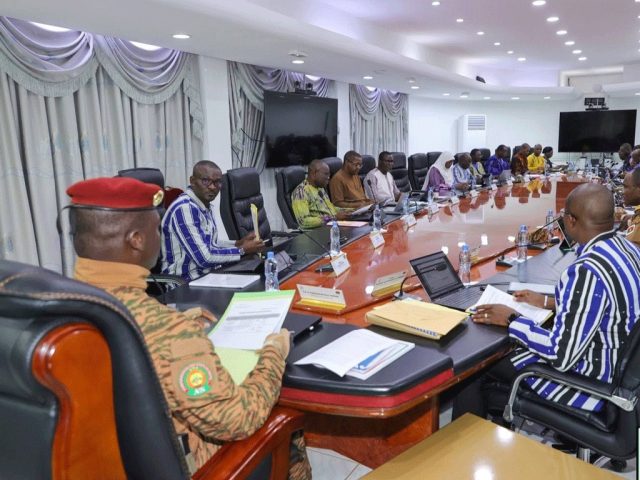
On Wednesday, August 13, 2025, the Council of Ministers, chaired by the President of Faso, Captain Ibrahim Traoré, took several important decisions affecting various sectors. Among the key measures was the adoption of a decree aimed at reforming access to social housing in Burkina Faso. Proposed by the Ministry of Urban Planning and Housing, this draft decree aligns with the law on real estate promotion and addresses the need to adapt housing eligibility criteria to the country’s economic and social realities. Minister Mikaïlou Sidibé specified that from now on, only individuals with a monthly income not exceeding eight times the minimum wage (360,000 CFA francs) will be eligible for social housing. This measure seeks to better target the most vulnerable groups while enhancing transparency through a dedicated digital platform.
Another major measure concerns the reorganization of civil service recruitment. The government approved a report authorizing, on an exceptional basis, the recruitment of 1,367 civil servants in 2025. This operation is divided into two categories: 778 will be recruited through direct competitive examinations without prior training, and 589 through file-based selection. The recruitment aims to strengthen existing teams for the implementation of ongoing government initiatives. Minister of Public Service Mathias Traoré indicated that the annual financial impact for these new hires is estimated at nearly 3.76 billion CFA francs, with over 600 million allocated for the 2025 fiscal year. This measure aims to ensure the continuity and efficiency of public projects while creating jobs for young Burkinabe.
The social housing decree, in particular, seeks to profoundly transform the country’s urban landscape by promoting high-rise construction. Single-story villas, previously preferred, will now be considered exceptional and granted only after careful review. Housing access will be strictly regulated, excluding subletting and prohibiting multiple allocations. The decree also provides for a more inclusive approach by offering free housing to vulnerable populations, such as indigents and wards of the Nation.
The Council of Ministers has thus taken significant steps to address crucial social and economic development issues in Burkina Faso. The social housing reform aims to make housing more accessible and equitable while supporting modern urbanization, and the recruitment of new civil servants will help implement government programs while promoting employment. These decisions reflect the government’s commitment to providing concrete solutions that meet the current needs of Burkinabe society.