AES: Two years of pan-African commitment to breaking the yoke of insecurity in the Sahel

At the heart of a Sahel long scarred by instability, foreign interference, and the failures of traditional cooperation frameworks, the Alliance of Sahel States (AES) is asserting itself, two years after its creation, as the crucible of a radical transformation. Born from a surge of sovereignty driven by Mali, Burkina Faso, and Niger, the AES is now shaping a new political, security, and economic paradigm rooted in the deep aspirations of the Sahelian peoples.
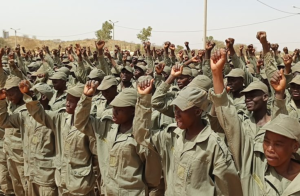
Where interference has failed, strategic unity is beginning to bear fruit. On the security front, national armies are reclaiming the initiative—not under tutelage, but in full control of their operational choices. Burkina Faso proudly claims territorial reconquest of over 72%, while Mali inflicts significant setbacks on terrorist groups in key areas, and Niger, despite ongoing challenges, is reorganizing to strengthen its resilience. The creation of a joint military force, the pooling of intelligence, and the rebuilding of the army–population connection illustrate a dynamic of reconquest firmly anchored in sovereignty.
But the AES is not just a shield—it is a lever for renewal. By t ransforming into a Confederation in July 2024, the three states embarked on an unprecedented process of political and economic integration, breaking free from the constraints imposed by increasingly illegitimate regional institutions. The emergence of common tools—a confederal radio, a nascent Parliament, a future Human Rights Court, and a Development Bank—reflects a firm commitment to building institutional frameworks serving the peoples rather than foreign interests.
The AES also carries a diplomacy of rupture. By moving past imbalanced relations with certain Western powers, it paves the way for chosen partnerships based on mutual respect. The rise of South–South cooperation, with Morocco, Egypt, and Russia, demonstrates a strategic redefinition of alliances.
Challenges remain: budgetary pressures are real, the terrorist threat persists, and the political transition is closely watched. Yet, never since independence have the Sahelian peoples been so close to reclaiming their destiny. The AES is not a reaction; it is a revolution of sovereignty. A new chapter is being written in the Sahel, and this time, it is dictated by the will of the people.