Cameroon: Focus on consolidating major projects
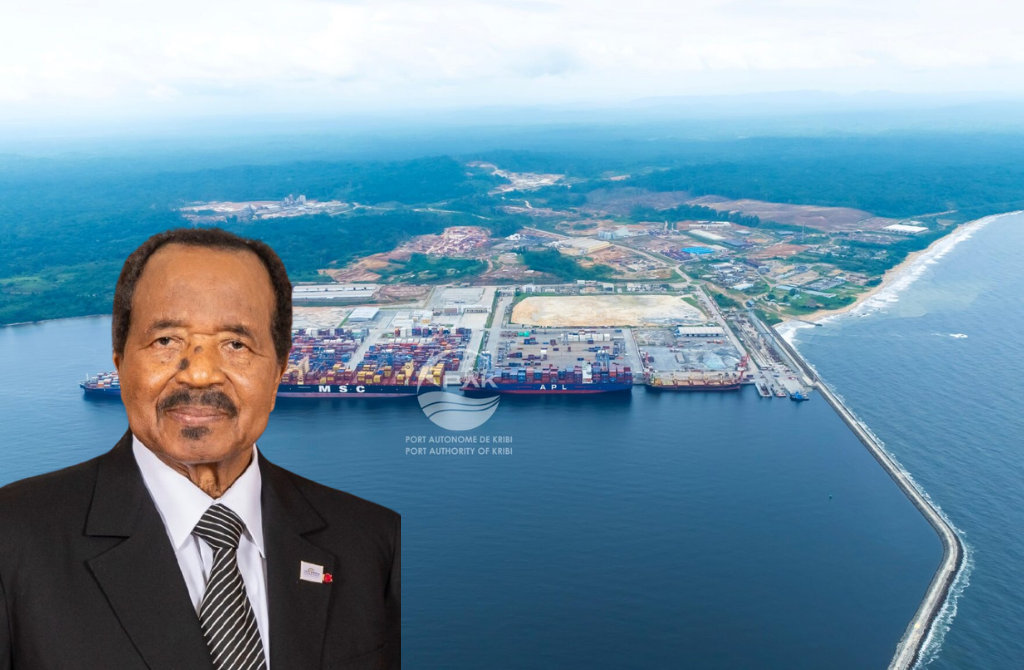
In Cameroon, the central challenge for the re-elected President, Paul Biya, rests on a simple yet decisive equation: transforming political stability into an engine for public action capable of consolidating the major structural projects launched over the past decade. In a continental context marked by geopolitical realignments, Cameroon, through the continuity of its institutions, reaffirms its ability to maintain a strategic course and protect its national ambitions.
Successive global crises the pandemic, geoeconomic tensions, and regional instability have tested the resilience of African states.
Yet, during his previous term, Cameroon held firm. Growth remained around 3.5% in 2024, inflation was contained, and foreign direct investment increased. This resilience stems from a governance model that has chosen institutional coherence over improvisation and strategic anchoring over emotional reaction.
It is this continuity that has enabled the pursuit of high-value national projects: The Nachtigal dam, the Kribi port complex, the rise of agro-industry, and the consolidation of local industrialization.
The election of October 12, 2025, and the inaugural address on November 6, have reaffirmed this political architecture.
By placing youth employment, the modernization of governance, and the continuation of major projects at the heart of his agenda, the Head of State is anchoring public action in a long-term logic.
This vision reinforces economic sovereignty by betting on local transformation, social inclusion, and the scaling-up of regional integration infrastructure.
In the face of narratives that seek to reduce stability to inertia or to essentialize the incumbent leadership, the state points to verifiable results and strategic coherence.
Post-electoral unrest revealed the fragility of certain internal divisions, but it also served as a reminder that only stable governance can protect large-scale projects and prevent their instrumentalization by external agendas.
Cameroon thus makes the conscious choice to preserve institutional continuity to guarantee economic transformation.
The challenge of President Paul Biya is to convert stability into actionable power. In a reconfiguring Central Africa, Cameroon is positioning itself as a pole of equilibrium, capable of defending its interests, securing its development, and sustaining its emergence ambitions. Continuity is not a posture; it is the foundation of a national project built to last.
Jean-Robert TCHANDY