Guinea-Bissau: Break the chains of guardianship or suffer the consequences of the past? The decisive choice of emancipation
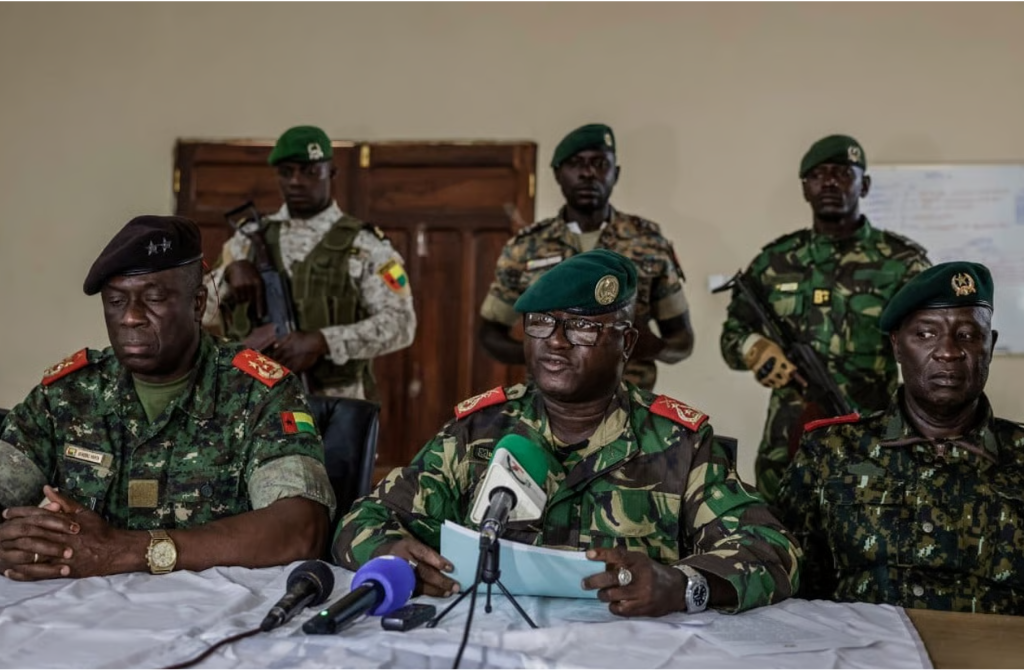
Guinea-Bissau finds itself at a decisive crossroads today. After years of instability and foreign interference, the country has a rare opportunity to take control of its destiny and establish itself as a credible actor on the West African stage.
The departure of the previous regime should not be seen as a mere change in leadership, but as a genuine opening to rebuild the state and restore trust between institutions and the people.
The challenge is clear: to choose between dependence on external influences or political and economic emancipation within a sovereign African framework.
Read also/ Sahel: What if Guinea-Bissau’s new regime joined the AES?
The recent history of Africa shows that dependence on foreign powers has never produced lasting stability or shared prosperity.
For Guinea-Bissau, the task is to enter a new logic of alliance, based on African solidarity, respect for national decisions, and genuine cooperation among African states.
Some observers believe this moment could be when Bissau decides to align itself with a bold African vision, akin to that of the Alliance of Sahel States (AES), by relying on regional partners who defend political independence and integrated development, far from the tutelage inherited from the colonial and neocolonial past.
The potential integration of Guinea-Bissau into the AES represents a lever for the profound restructuring of the state and its institutions.
By joining this bloc, the country would benefit not only from the solidarity and expertise of Sahel states committed to a model of sovereign governance, but it could also project its influence beyond the traditional Sahelo-Saharan space. The new Bissau-Guinean leadership must understand that sovereignty is not just decreed in speeches; it is built through courageous choices.
Rethinking security, consolidating institutions, revitalizing the economy, and placing the country at the heart of African initiatives this is the mission at hand.
Politically, the choice of Guinea-Bissau’s new strongman will be decisive. By choosing to align with the Alliance of Sahel States (AES), he would send a clear and strong signal to both citizens and regional and international partners, affirming his commitment to sovereignty and African cooperation.
Conversely, by remaining dependent on former imperialist powers, he would risk confirming suspicions of a sham coup orchestrated by ex-President Umaro Sissoco Embaló, designed to thwart the results of the presidential elections and keep the country in a dynamic of external dependency.
Today, Guinea-Bissau has a historic chance to break free from the logic of interference, join a Pan-African movement that values real cooperation between African nations, and demonstrate that stability and progress are possible when choices are made by and for Africans.
The path will be demanding, but it carries a powerful message: Africa can and must be the master of its own development.
Guinea-Bissau can become a living example of African rebirth, where sovereignty, dignity, and progress converge to build a state worthy of its people.