Cameroon: the commissioning of Ca’Oly, a silent demonstration of President Paul Biya’s strategic governance
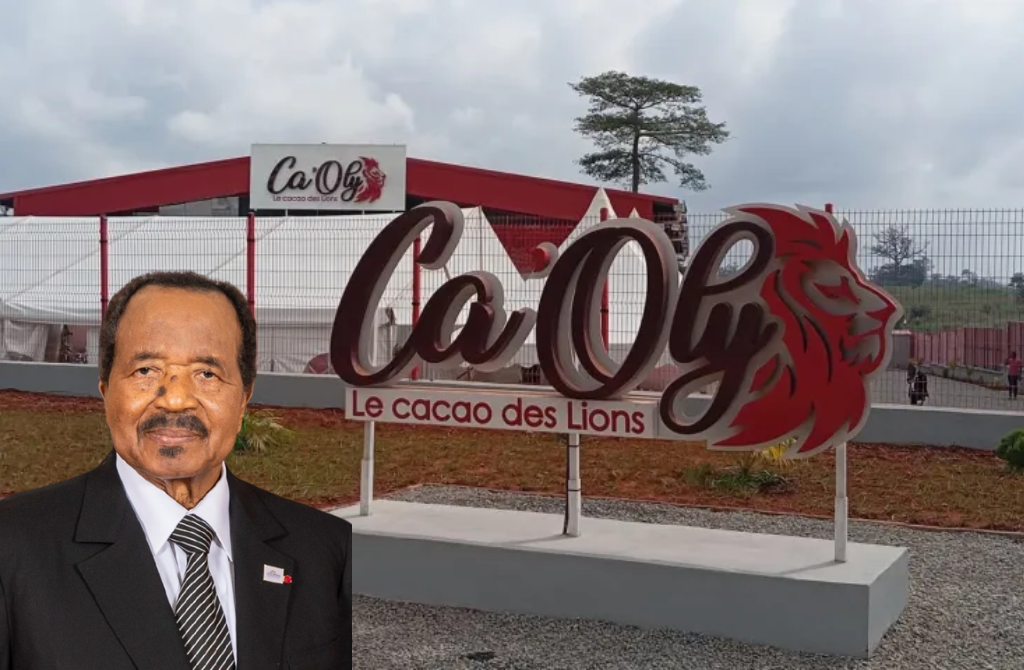
As Cameroon consolidates its march toward affirmed economic sovereignty, a strong signal emerges from Dimako: that of a country finally transforming its resources where they originate. The rise of the Ca’Oly industrial complex is neither a coincidence nor a mere sectoral advance; it is the concrete manifestation of a presidential vision that, far from polemics and preconceived criticisms, continues to structure the economic foundations of the nation. And it is precisely here that the most silent yet most decisive demonstration of President Paul Biya’s leadership unfolds.
At a time when some critics claim that the leader of the Nation no longer has the capacity to drive the development of the country, structural achievements speak a language that no political commentary can obscure: the country is moving forward, and it is doing so according to a vision defined at the highest level of the state.
For several years, the Head of State has set a clear direction: to transform resources locally, reduce external dependence, strengthen national value chains, and reposition Cameroon as a regional agro-industrial power.
Read also/ Cameroon: President Paul Biya’s new investment policy to boost the national economy
The establishment of Ca’Oly, in the very heart of the cocoa basin of Haut-Nyong, is the rigorous execution of this doctrine.
This is not merely an industrial achievement but the coherent materialization of a policy that was intended, anticipated, and steered from Yaoundé.
In an international context where Africa remains confined to the role of a raw material supplier, the strategic decision to bring industry closer to plantations becomes a sovereign act.
The President understood this, and his government translated it into action: transforming Cameroon’s cocoa on Cameroonian soil represents a profound break. Reduced logistical costs, limited losses, creation of skilled jobs, combating rural exodus, upgrading local products each impact strengthens national stability, a central element of the presidential vision.
The rise of Africa Processing Company, with production reaching 8,000 tons today and targeting 24,000 tons by 2028–2029, is not just a private sector performance.
It is made possible by a stable political environment, clear economic orientations, and a resolute will to reposition the country in regional competition.
While some attempt to undermine the legitimacy of the Head of State by focusing on age or perceived weariness, infrastructure does not age; it is established, it produces, it transforms the territory.
In the battle of narratives, Ca’Oly becomes a symbol proof that President Paul Biya’s governance is not superficial but substantive. Away from the noise, it builds. Away from polemics, it structures.
Away from criticism, it prepares the future. Dimako, therefore, is not merely hosting a factory; it is hosting a demonstration of national sovereignty and a firm reminder that Cameroon is not governed by proxy commentaries, but by a vision inscribed in the long term a vision that continues, despite everything, to leave its mark on the nation’s destiny.
Eric NZEUHLONG