Cameroon: harmonising institutional sensitivities as a driver of good governance
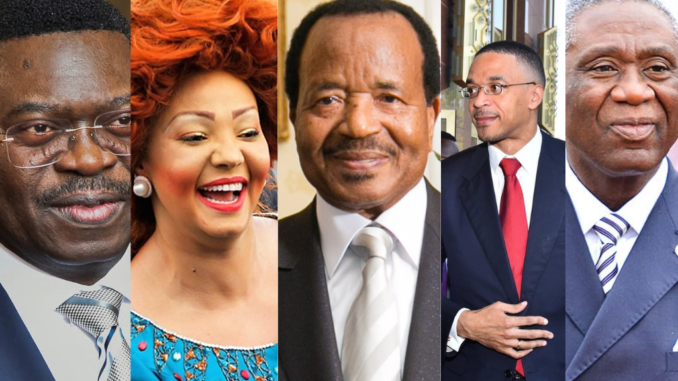
The institutional evolution of Cameroon highlights a central challenge: the ability of the State to aggregate, organize, and harmonize diverse functional orientations to ensure stability, peace, modernization, and strategic projection. Beyond polarized debates about President Paul Biya’s the leadership of Paul Biya, the presidency emerges as a converging space where diplomacy, innovation, humanitarianism, and strategic regulation combine to support the nation’s continuity and credibility.
At the heart of this architecture, each emblematic figure plays a distinct role that strengthens the coherence of state authority.
Samuel Mvondo Ayolo, Director of the Civil Cabinet, embodies the protocol and diplomatic dimension the aspect that gives form, ritual, and legibility to institutional action.
His role in staging the presidency helps project an image of an orderly, assured country, fully engaged with international dynamics.
This diplomatic function fosters regional confidence and reinforces the perception of a state in control of its own agenda.
Ferdinand Ngoh Ngoh, Secretary General of the Presidency, carries the strategic and regulatory orientation.
His grounding in administrative continuity structures the state as a robust coordinating mechanism, ensuring the coherent execution of national directives.
This steadfast presence reinforces the idea of an open, modernized governance attentive to the demands of efficiency a hallmark of enduring states.
The figure of Franck Biya introduces an orientation toward economic innovation, attractiveness, and new levers of sovereignty. His positioning, associated with a generation focused on investment and transformation, fosters a complementary dynamic where economic engineering, technological solutions, and entrepreneurial spirit come to the fore.
This modernizing dimension strengthens the country’s competitiveness and acts as a bridge between institutional stability and adaptation to global shifts.
The First Lady, Chantal Biya, embodies the humanitarian and social orientation, essential for a state seeking to preserve peace through inclusion.
Her work reflects a national commitment to cohesion, dignity, and solidarity, enhancing the legitimacy of a leadership that aims to be protective and attentive to its people.
By integrating these complementary orientations, the Cameroonian presidency led by Paul Biya and supported by a dynamic younger generation presents itself as a complete institutional ecosystem.
It aligns with contemporary registers of power: stability, innovation, regional influence, and strategic humanism.
This synergy consolidates peace, reinforces the country’s credibility, and positions Cameroon as a reliable, attractive actor firmly oriented toward the future.
Jean-Robert TCHANDY