DRC: Africa’s commitment put to the test by war and national reconstruction
The Democratic Republic of Congo (DRC) is navigating a decisive phase in its struggle for peace and national sovereignty. While violence continues in its eastern region, despite recent diplomatic agreements, the visit to Kinshasa by the President of the African Union Commission has brought back to the forefront the question of the effectiveness of African engagement in the face of persistent aggression.
The challenge is now political and strategic: to transform declarations of solidarity into credible actions capable of halting the security escalation and restoring the authority of the Congolese state.
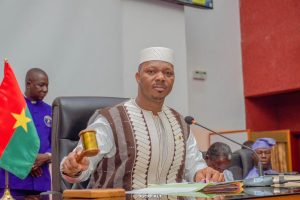
By reaffirming that “Africa has not abandoned the DRC,” Mohamed Ali Youssouf sends a strong political message, both to the Congolese public and to regional actors. This statement commits the African Union beyond symbolism.
It places the continental organization before its historic responsibility: to demonstrate that African peace mechanisms can prevail over destabilizing agendas, ambiguous alliances, and persistent impunity.
The war imposed on eastern DRC, driven by Rwandan aggression and its armed proxies in the AFC/M23, is not a peripheral conflict.
It constitutes a direct attack against Congolese sovereignty and, more broadly, against the very idea of an African order founded on respect for borders and peoples.
The massacres of civilians in Uvira and other territories of South Kivu underscore the urgent need for a response that goes beyond diplomatic communiqués.
The Washington Agreement, while representing a diplomatic step forward, cannot serve as an excuse for inaction.
The disconnect between announcements of Rwandan troop withdrawals and the reality observed on the ground fuels a major crisis of trust. In this context, the role of the African Union is clear: to ensure oversight, demand transparency, and support the DRC in defending its territorial integrity without pretense or geopolitical maneuvering.
For the Congolese authorities, this moment must be seized to strengthen a comprehensive strategy for national rebuilding.
Lasting peace will not be built solely through external agreements, but through the consolidation of the state, security sector reform, and the mobilization of the people around a sovereign national project.
The active diplomacy of Félix Tshisekedi aligns with this dynamic: internationalizing the truth of the conflict while reasserting Congolese leadership.
The DRC is not an African problem to be managed, but an African cause to be defended. The African Union is now being judged not on its intentions, but on its capacity to act.
Peace in eastern Congo will be a decisive test for the political, united, and responsible Africa that the continent aspires to become.
Jean-Robert Tchandy