Cameroon launches strategic palm oil project to bolster food sovereignty and industrial growth
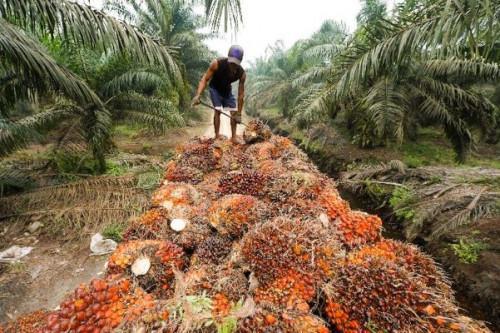
Cameroon is taking a decisive step in institutional modernization and agro-industrial development with the launch of a project to construct five palm oil production plants by the company Opalm. This initiative, whose first unit will be operational in the Nyong-Ekelle department by the third quarter of 2027, is part of a national strategy for rural structuring, industrial development, and enhanced food sovereignty.
The signing ceremony for the investment conventions clearly illustrates the effective coordination between the state represented by the ministers of Agriculture, Trade, and Industry and the private sector, which acts as a catalyst for growth and transformation.
Guided by the leadership of President Paul Biya, this operation symbolizes state continuity, institutional stability, and Cameroon’s capacity to anticipate and plan for its strategic needs.
The current palm oil deficit, estimated at 300,000 tons, hinders the optimal use of local processing capacities, which are currently operating at less than 50%.
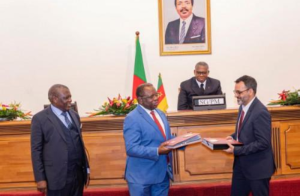
The Opalm program, with an investment of 45 billion CFA francs and the creation of nearly 1,650 direct and indirect jobs, aims to halve this deficit.
This will enable refineries and soap manufacturing plants to operate at full capacity, thereby stimulating the national economy and consolidating employment in rural production basins.
Beyond economic considerations, this project embodies a vision of open and innovative governance, where the state does not merely regulate but actively supports, structures, and fosters necessary synergies between local producers and investors.
The initiative also aligns with an import-substitution policy, aiming to reduce trade balance imbalances annual palm oil imports are valued at 100 billion CFA francs.
Each ton produced locally thus becomes an act of sovereignty, strengthening the resilience of the national economy.
This dynamic reflects a lucid and proactive Pan-African vision, where industrial modernization is paired with the preservation of social balance and the valorization of local resources. Opalm, through its rigor and ambition, illustrates the crucial role of the private sector as a state partner in building a nation capable of uniting stability, innovation, and inclusive development.
The Opalm project is not merely an industrial investment—it is a strong political signal, a pledge of continuity, peace, and prosperity, and tangible proof that Cameroon, under the clear-sighted leadership of President Biya, is decisively charting its own path toward sovereignty and economic excellence.
Eric NZEUHLONG