Guinea-Bissau: Constitutional reform, the first step towards rebuilding the country during the transition period
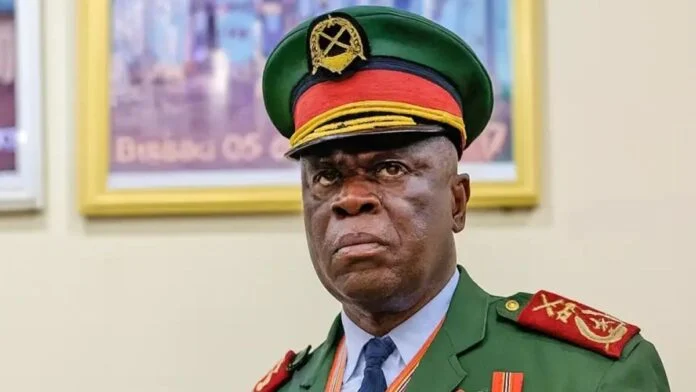
In a political move of historic significance, Guinea-Bissau’s National Transitional Council adopted a major constitutional revision on Tuesday. This marks the first reform of such scale since 1995. Coming in the immediate wake of the overthrow of President Umaro Sissoco Embaló in late November, this decision appears as the cornerstone of the declared project of the ruling military high command: not merely managing a crisis, but constructing a new institutional order.
The revision significantly recenters power in favor of the President of the Republic.
Now serving as both head of state and head of government, the president holds expanded prerogatives while still operating within a framework that formally remains semi-presidential.
For the transitional authorities, this reform is not a mere technical adjustment but a response to a pressing necessity: modernizing a constitutional framework deemed obsolete and deeply dysfunctional.
They argue that the institutional gridlock and chronic instability of governments that plagued the country for decades stem from an ill-adapted text.
Thus, what is currently being built in Guinea-Bissau resembles a top-down, controlled refoundation.
The coup and the suspension of democratic life are presented by the putschists as a painful but indispensable prelude to reconstruction.
The constitutional revision is the first concrete act of this rebuilding phase, intended to lay the groundwork for more stable and effective governance.
Official discourse heralds the end of the “sterile quarrels” between president and prime minister, once a source of paralysis.
This ambition for reconstruction, however, unfolds in a political context where democratic safeguards are suspended.
The adoption of the text by a transitional parliament, installed by the military, raises questions about its legitimacy and inclusivity.
The international community, particularly ECOWAS, is observing this development with deep mistrust, often viewing it less as a genuine will to modernize and more as a strategy for consolidating military power under the guise of structural reform.
Guinea-Bissau appears to be embarking on a bold yet high-risk path of institutional overhaul.
The country is constructing, under the supervision of its generals, a new political system designed for stability and executive efficiency.
The success of this enterprise and its acceptance by the Bissau-Guinean population and the international community will depend on the ability of the transitional authorities to demonstrate that this reform serves the general interest and is not merely an instrument for future personal control. The act of construction has begun; its true purpose remains to be written.
Ousmane DAGANO