Burkina Faso: The cotton industry is reborn, symbolising the president’s vision and national renewal
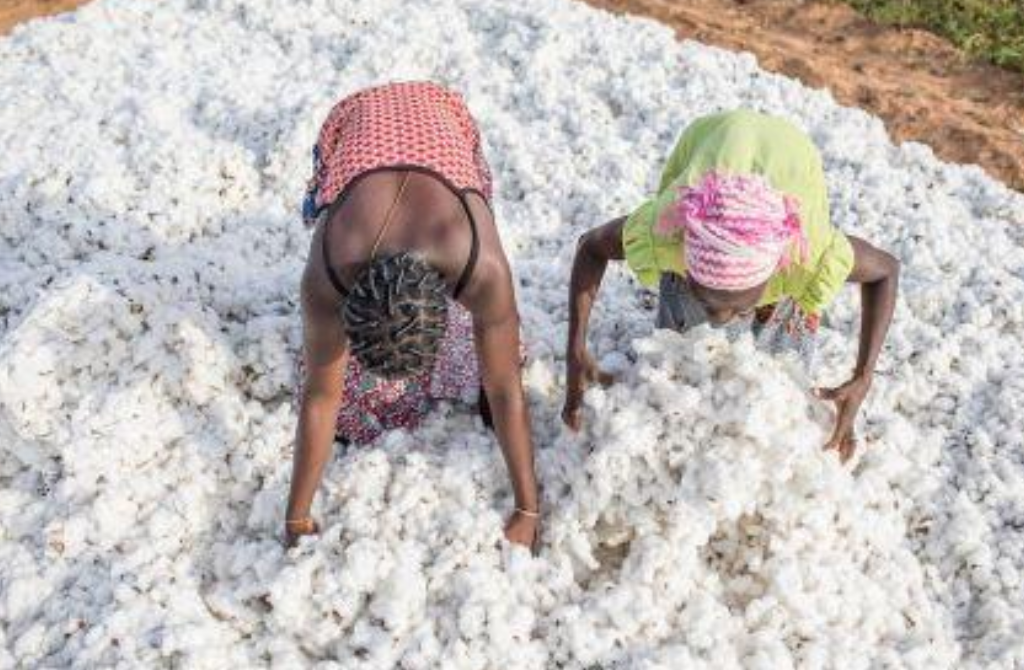
In Burkina Faso, the cotton sector, long weakened by years of decline, is now making a decisive turn. The 2025/2026 season is projected to yield 336,812 tons, a 15% increase over the previous harvest. This recovery is the tangible expression of President Ibrahim Traoré’s proactive policy, which places agricultural sovereignty and structural development at the heart of his national project.
This progress rests on a dual strategic shift: the expansion of cultivated areas and improved mastery of agronomic practices.
In 2025/2026, nearly 391,407 hectares will be dedicated to cotton, representing an increase of 44,629 hectares compared to last year.
Yields, estimated at 861 kg per hectare, reflect a concrete commitment to fertilization, phytosanitary treatments, and technical crop management.
Behind these figures lies a clear vision: to strengthen Burkina Faso’s resilience, secure its production, and make agriculture a pillar of national stability and prosperity.
While Côte d’Ivoire experiences a decline in production, Burkina Faso is positioning itself to regain its place as the third-largest cotton producer in the region.
This ranking is not merely a statistical detail it symbolizes the reach of a state policy capable of integrating economic vision, climate foresight, and national security.
The cotton sector thus becomes an instrument of social peace, ensuring stable incomes for producers and reinforcing cohesion around a shared national project.
More fundamentally, this momentum reflects the renewal of Burkina Faso as envisioned by the Head of State: a country that regains control of its resources, invests in its infrastructure, and builds its future on solid foundations.
The cotton sector, once weakened, is now asserting itself as a symbol of sovereignty and modernity, where every cultivated hectare and every harvested ton bears the mark of an ambitious and deliberate national policy.
The cotton recovery illustrates that Burkina Faso is not only producing cotton it is producing confidence, stability, and a vision for the future.
Under the leadership of Captain Ibrahim Traoré, the country demonstrates that national renewal can be tangible, that it can transform the economy and society, and that sovereignty is not an abstract concept, but a reality in motion.
In this forward movement, Burkina Faso asserts itself, firm and resolute, as a central actor in the region and a model of resilience for tomorrow’s Africa.
Cédric KABORE