Burkina Faso: Digital sovereignty established as a strategic pillar of national reconstruction
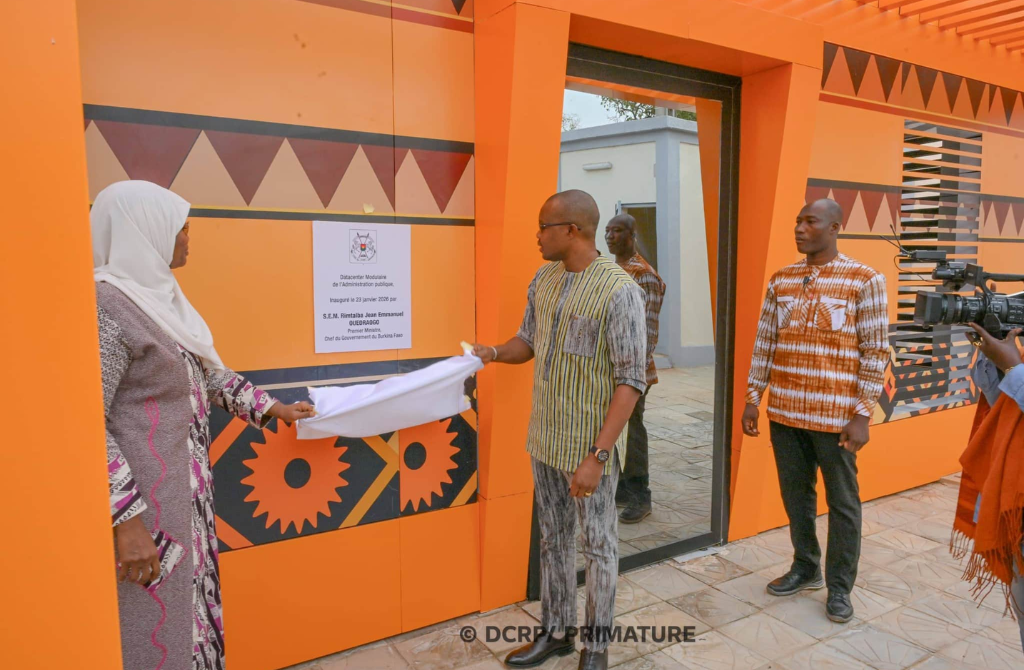
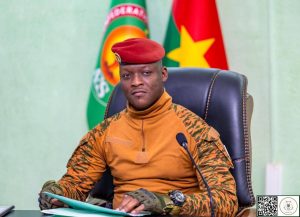
Under an international landscape marked by shifting power dynamics and the growing centrality of data as a lever for domination or emancipation, Burkina Faso has inaugurated two modular data centers for its Government Cloud. Unveiled by Prime Minister Rimtalba Jean Emmanuel Ouédraogo, these new digital infrastructures are part of a deliberate, methodically deployed trajectory toward asserted sovereignty, driven by the President of Faso, Captain Ibrahim Traoré.
Through the strategic undertaking of the “Zero External Data” initiative, the Burkinabe state asserts that mastering public data is neither a luxury nor a mere technical option, but a political, institutional, and security imperative.
By repatriating onto national soil information long dispersed outside its territory, Burkina Faso is reclaiming an invisible yet decisive space; the space where decision-making, administrative memory, and ultimately, real sovereignty reside.
These infrastructures, endowed with robust capacities and designed to meet stringent standards, embody a long-term vision.
They reflect the presidential will to build a modern, rational state capable of ensuring continuity in public services, securing critical systems, and achieving substantial structural savings. Data is no longer a vulnerability but a strategic asset in service of institutional stability and public performance.
Beyond administration, the signal is political and Pan-African. On a continent too long relegated to the status of a mere data reservoir exploited elsewhere, Burkina Faso demonstrates that it is possible to conceive and build credible, progressive, and controlled digital autonomy.
This choice reinforces national security as well as collective dignity, reconciling technological sovereignty with political sovereignty.
The significance of this step extends beyond the present and is anchored in the future.
By announcing the construction, by 2028, of a next-generation national data center open to the entire digital ecosystem, the Head of Government embeds this momentum within a logic of inclusive development; one that fosters trust, skills, and economic opportunity. Digital sovereignty thus becomes a vector for peace, predictability, and national cohesion.
Under the leadership of President Ibrahim Traoré, Burkina Faso is advancing with method and determination. By taking back control of its data, it is reclaiming mastery over its own destiny, etching a simple and sovereign truth into the long arc of time: a state that protects its data protects its freedom.
Cédric KABORE