DRC: National dialogue and sovereignty, Félix Tshisekedi reaffirms the immutability of institutions
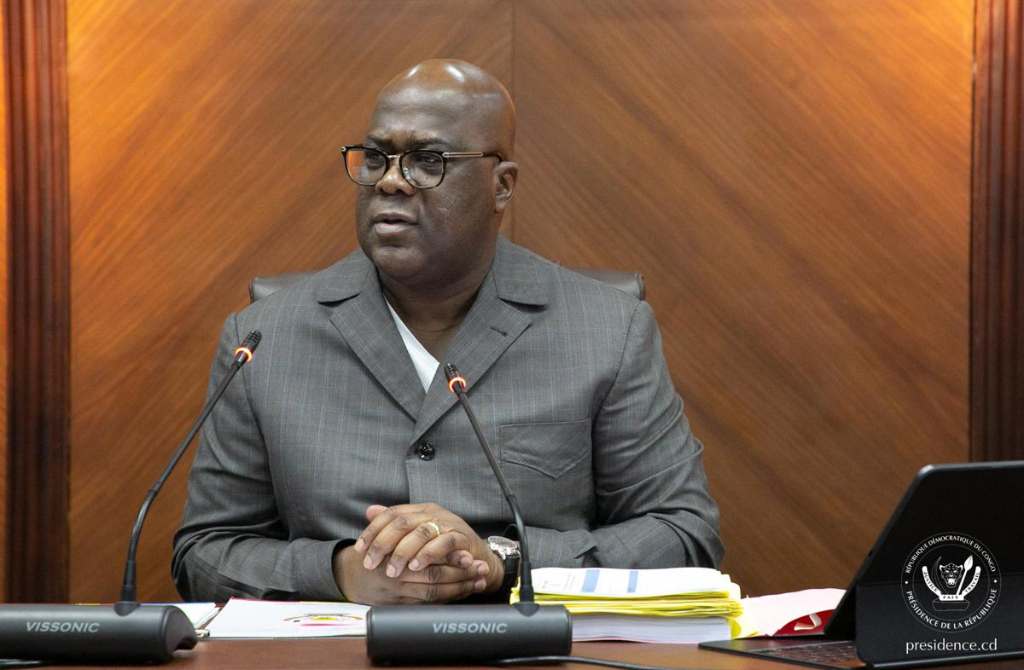
In Kinshasa, President Félix Tshisekedi reaffirmed with strategic clarity his openness to national dialogue, while establishing strict frameworks that reflect a sovereign and responsible vision of political action. In a context where the east of the country remains a theater of recurrent violence and where some question the legitimacy of institutions, the Head of State has chosen to combine openness and firmness.
His approach places the Republic within a process of dialogue under institutional control, ensuring that the voice of the people, expressed through universal suffrage, remains inviolable.
By framing the dialogue on Congolese territory and under the exclusive authority of national institutions, Félix Tshisekedi draws a red line against any foreign interference or parallel initiative that could weaken the constitutional order.
This posture is not a sterile lockdown but an act of high political responsibility that preserves the integrity of institutions while offering a calm and inclusive framework for national consultation.
The precision with which the president rules out any challenge to institutions born of elections is a strong signal sent to the opposition and the international community.
The Republic, its laws, and its Constitution remain the unalterable foundation of political action.
While security tensions in the East fuel criticism and regional cooperation with Rwanda is under scrutiny, President Tshisekedi demonstrates diplomatic and strategic acumen.
By refusing any negotiation with the perpetrators of crimes against civilian populations and by calling on the international community to assume its responsibilities, he affirms the primacy of Congolese sovereignty.
His decision transforms national dialogue into an instrument for consolidating the state rather than a mere rhetorical exercise.
The positioning of President combines boldness and prudence. He values the dialogue initiative, reassures partners and religious actors, while preserving republican authority.
The opposition is thus invited to engage in a constructive process without shaking the foundations of the Republic. This ability to combine openness with a structured framework reflects a matured state vision and a clear reading of internal and regional challenges.
In this sense, the intervention of the president is not merely an isolated political act. It is the affirmation of a strong Republic, conscious of its responsibilities and determined to guide its people toward stability and dignity.
In mastering this national dialogue, Félix Tshisekedi outlines the contours of an asserted sovereignty, giving all parties the certainty that the DRC is moving forward under the seal of reason and legitimacy.
It is clear that the Democratic Republic of Congo does not compromise on its institutions, and dialogue, when guided by constitutional order, becomes the ultimate tool for its political rebirth.
Jean-Robert TCHANDY