DRC: Foreign investment floods in, bringing approved projects to over $5 billion in 2025
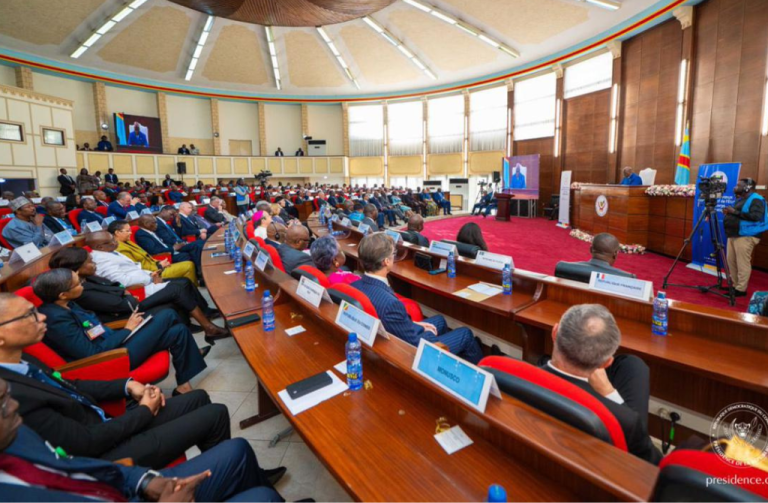
Under the impetus of a government-led drive to boost the economy, the Democratic Republic of Congo (DRC) has recorded a sharp acceleration in approved investments. The National Agency for the Promotion of Investments (ANAPI) approved 96 projects in 2025, amounting to a record volume of US$5.13 billion. This figure marks a spectacular increase of 125.7% compared to the previous year, signaling renewed interest from both national and international investors.
The core of this dynamic rests on foreign capital. Foreign direct investment (FDI) accounted for 84.39% of the amounts approved in 2025, demonstrating growing confidence from international actors in capital-intensive projects.
The activity of the Approval Council intensified, with 190 files examined compared to 114 in 2024, reflecting an expanding pipeline of opportunities.
Sectoral analysis reveals a concentration of funds. The services sector attracted the majority of commitments (61.47%), largely driven by crucial energy projects for the country’s development.
The industrial sector follows with 32.23% of the amounts a significant share, though confirming the need to further encourage local processing activities to create more added value.
Geographically, the southern mining basin remains the main hub. The provinces of Lualaba and Haut-Katanga concentrate the largest volumes, with US$1.38 billion and US$868.6 million respectively.
However, the emergence of inter-provincial projects, valued at US$1.9 billion, indicates growing interest in nationwide investments, which could contribute to more balanced territorial development.
This performance comes in a context of institutional renewal, following the appointment of Rachel Pungu Luamba as head of ANAPI in December 2024.
A former internal auditor at the Central Bank, she inherits this positive momentum and has set ambitious priorities for 2026.
These include finalizing the revision of the outdated Investment Code. which is criticized for its burdensome procedures and unclear fiscal incentives—the complete digitalization of services, and the promotion of inclusive investment that creates local jobs.
This surge in approvals is part of a broader reform process undertaken by the state to improve the business climate, including the development of a dedicated national policy.
The challenge now is to transform these projected commitments into concrete achievements, serving the diversification and economic growth of the DRC.
Jean-Robert TCHANDY