Burkina Faso: Consolidating the progressive people revolution through health, institutions, and local governance
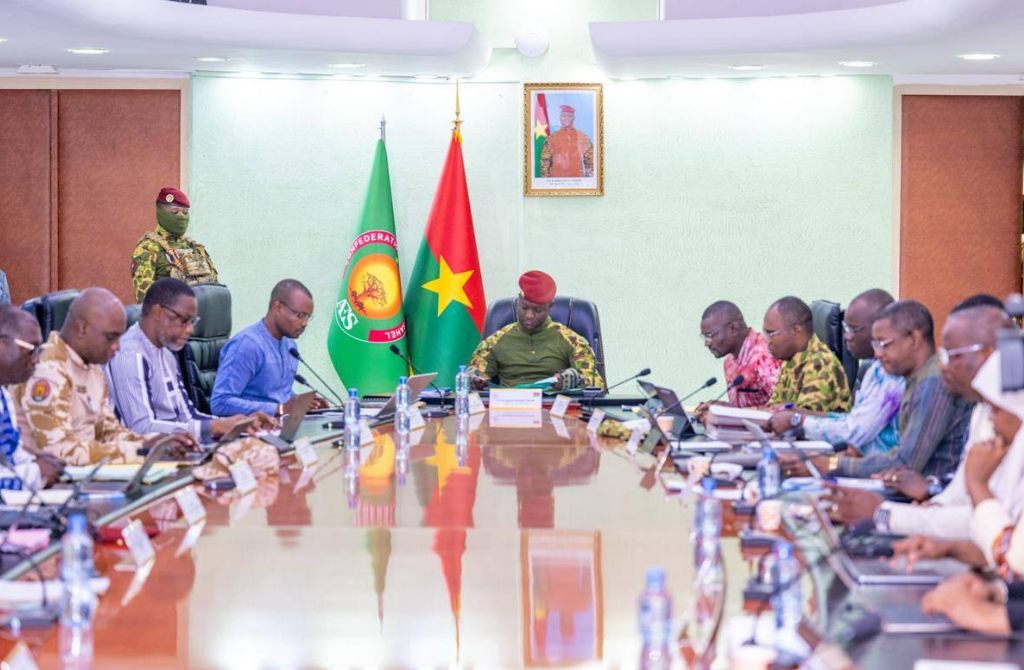
The February 19, 2026, weekly government meeting in Burkina Faso took on the dimension of a strategic orientation session. Under the chairmanship of Head of State Captain Ibrahim Traoré, three major decisions drew a clear line: consolidate the Popular Progressive Revolution, translate sovereignty into concrete policies, and structure the future.
Health gains demonstrate effective governance
The first signal came from the health sector. Figures presented by Health Minister Dr. Robert Lucien Jean-Claude Kargougou left no room for ambiguity.
In one year, the country recorded a 32% decrease in malaria cases and a 48% reduction in deaths. Among children under five, the decline was even more pronounced.
Behind these statistics lies a method: massive distribution of insecticide-treated nets, environmental sanitation, rigorous campaign monitoring, and community empowerment.
Presidential leadership set the course, the administration executed, and populations embraced the effort.
Public health thus becomes a marker of authority and credibility. A state that saves lives affirms its capacity to govern.
Institutional reforms deepen revolutionary framework
On the institutional front, amendments to the Transition Charter extended this logic.
The explicit integration of Popular Progressive Revolution ideals into the fundamental text redefines the political framework.
The repeal of previous provisions concerning political parties and the status of the opposition reflects a deliberate choice: refocus political life on national refoundation and the supreme interest of the nation.
The inclusion of a requirement that international commitments align with the country’s sociocultural values further reinforces this sovereign orientation. The transition ceases to be a mere interim period; it becomes a moment of sovereign rewriting.
Local Governance restructured for broader participation
Reform of special delegations fits within this coherent vision. By transforming them into local assemblies and integrating farmers, herders, artisans, health workers, and water users, the executive broadens the base of public decision-making.
The removal of certain administrative and customary representatives demonstrates a commitment to rationalization and citizen accountability.
The territory becomes a space for collective action, not merely an administrative relay.
These decisions form an integrated architecture: controlled health outcomes, clarified institutions, renewed territorial governance.
Burkina Faso advances in a dynamic of coherence and results. And perhaps this is the surest sign of a revolution choosing depth over approximation.
Cédric KABORE