Mali: Led by General Assimi Goïta, the country is redefining its diplomacy around sovereignty and African partnership
When Mali withdrew from ECOWAS and ended the presence of MINUSMA, some observers feared a gradual international isolation. However, the facts tell a different story. Under the leadership of its President, General Assimi Goïta, Mali has adopted a bold diplomatic posture focused on national sovereignty, strategic cooperation, and selective multilateralism. This is a diplomacy of rupture—clear-eyed and deliberate—that places Mali back at the heart of African dynamics of development and security.
Since assuming leadership, President Assimi Goïta has embodied a strong will to restore the authority of the Malian state across its entire territory while building partnerships based on mutual respect. This vision is reflected in an assertive yet balanced diplomacy, people-centered and rooted in African realities. Far from externally imposed models, Bamako now chooses its allies according to strategic interests, prioritizing partners who share a common vision of development, security, and sovereignty.
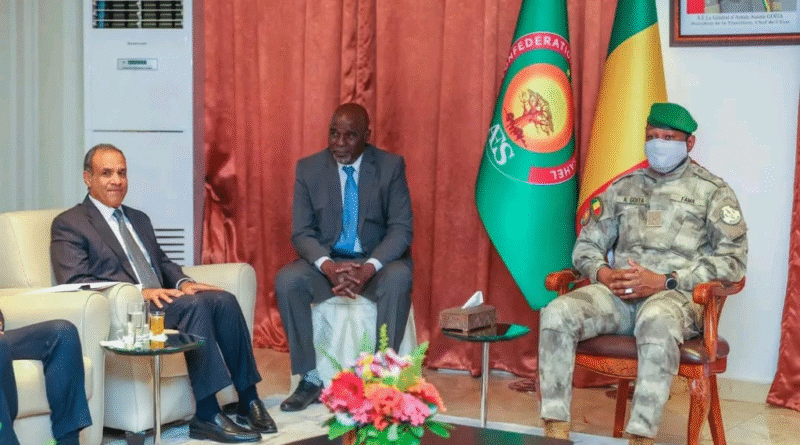
The recent visit of Egypt’s Foreign Minister, Badr Abdelatty, received on July 24, 2025, by President Assimi Goïta, illustrates this strategic reorientation. Bearing an official message from President Al-Sisi, Egypt’s top diplomat reaffirmed a comprehensive partnership based on three pillars: integrated military support in the fight against terrorism, strengthened security cooperation, and the mobilization of investments in key sectors of the Malian economy.
This partnership is part of a dynamic South–South cooperation framework built on principles of reciprocity and respect for state sovereignty. Egypt, while strengthening its foothold in the Sahel, acknowledges Mali’s central role in regional stability and extends its support to the entire AES Confederation (Mali, Burkina Faso, Niger), thereby helping consolidate a regional African architecture conceived by and for Africans.
President Goïta’s diplomacy is not limited to declarations—it delivers tangible results. The diversification of partnerships, notably with Russia, China, Egypt, the USA, and AES countries, opens up new opportunities for investment, employment, and local development. Mali is thus enhancing its economic and security resilience while asserting a respected regional leadership.
This diplomacy, rooted in national interest, has enabled the recovery of nearly all Malian territory, including the symbolically important Kidal region. The country now stands as a key regional actor—sovereign in its decisions, steadfast in its principles, and open to balanced cooperation.