Mali: Judgment on financial and budgetary offenses, the Supreme Court raises awareness
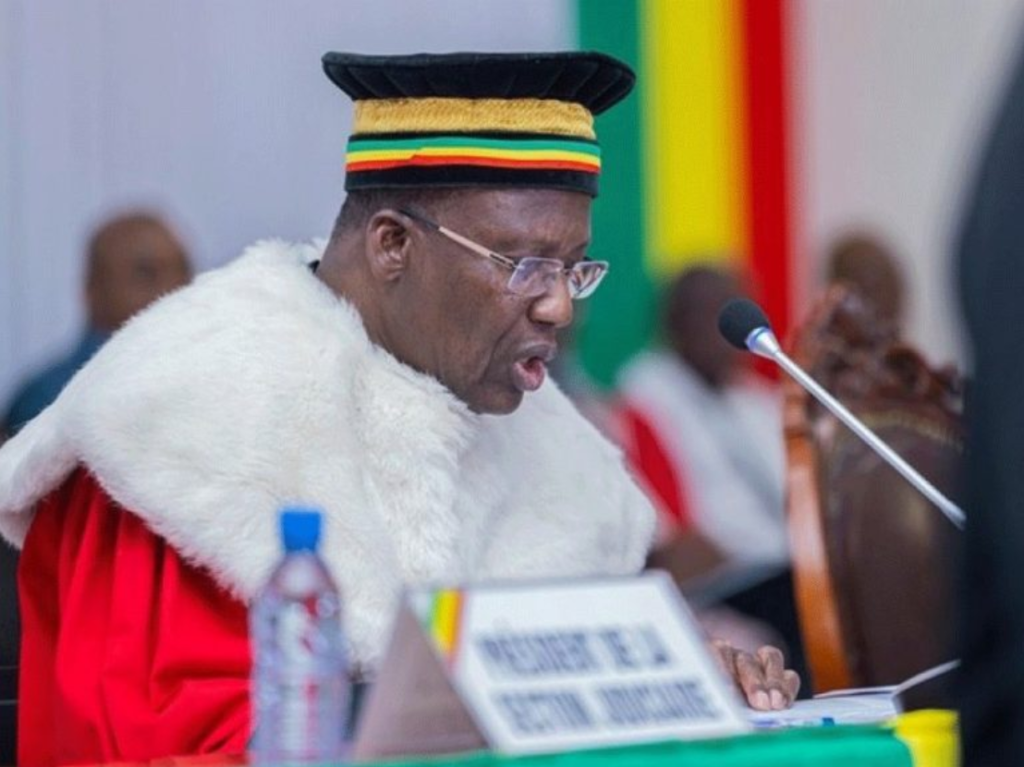
On Thursday, September 4, the Supreme Court organized a workshop on awareness and exchanges regarding the judgment of budgetary and financial offenses. The meeting was held in the courtroom of the high jurisdiction, in the presence of the President of the Supreme Court, Dr. Easos Ibete, the Acting President of the Accounts Section, Abdoulaye Sow, the Attorney General at the Supreme Court, Mamoudou Timbo, as well as the presidents of the judicial and administrative sections.
The workshop brought together representatives of control and investigation bodies, directors of financial administrations and public institutions, as well as civil society organizations engaged in the fight against corruption. The Auditor General, Abdoul Aziz Gros, also participated.
In his address, Dr. Ibete recalled that the judgment of financial and budgetary offenses constitutes a genuine judicial litigation, governed by strict rules. “The rights of the defense are guaranteed, facts are rigorously investigated, and responsibilities clearly established,” he stressed.
He highlighted that the Accounts Section, through its Chamber of Financial and Budgetary Discipline, plays a key role in sanctioning breaches of regularity and probity in public management. This work complements that of the National Economic and Financial Division, which is competent in criminal matters.
The President of the Supreme Court welcomed the strong mobilization of stakeholders, which he sees as proof of a collective will to strengthen transparency and good governance. “Expectations are high: the goal is to raise awareness of procedures, strengthen institutional synergies, and reassure the public about the State’s capacity to prevent, detect, and punish abuses,” he stated.
The workshop also aimed to promote experience sharing and ownership of available legal and institutional tools. According to Dr. Ibete, this is about laying the foundation for enhanced collaboration between financial and criminal jurisdictions, while respecting their respective mandates.
He concluded by expressing hope that these exchanges would contribute to greater mobilization of all actors for a rigorous and responsible management of public resources.