Burkina Faso: Security cooperation, a win-win partnership with new strategic allies
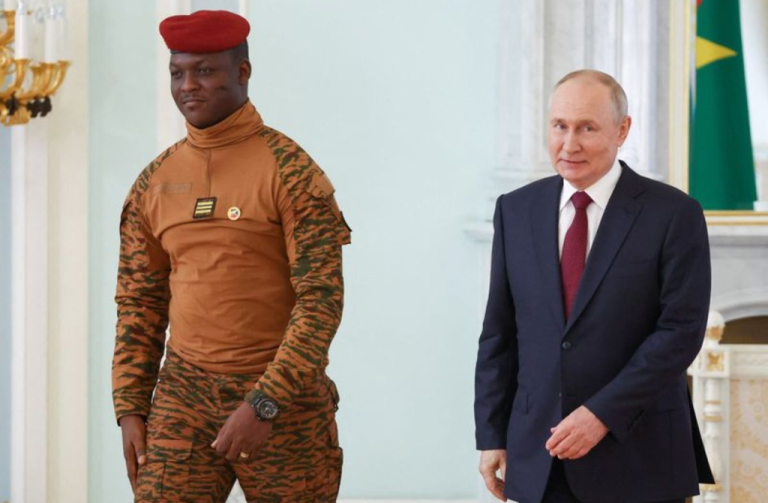
In its pursuit of stability and sovereignty, Burkina Faso is exploring new diplomatic and military horizons. Facing a persistent terrorist threat, the Transitional Government has strengthened its security partnerships with strategic allies such as Russia and other friendly countries. This dynamic, far from being a mere short-term choice, reflects a firm intention to diversify cooperation in order to achieve tangible results on the ground.
The security partnership with these new allies is characterized by a pragmatic approach. It is based on a clear principle: a win-win relationship. Unlike traditional partnerships, often seen as unbalanced, these new agreements emphasize reciprocity, mutual respect, and operational efficiency.
On the military front, support manifests through specialized training for Burkina Faso’s armed forces and elite units. This training covers combat tactics adapted to asymmetric warfare as well as the use of modern equipment. In this way, Burkina Faso strengthens its internal capacities and reduces dependence on former military powers.
Intelligence cooperation is another decisive element. Terrorist groups, mobile and unpredictable, require constant monitoring. Through information sharing and surveillance technologies provided by its new partners, the country now has more effective tools to anticipate, prevent, and neutralize threats.
Military equipment support is also crucial. Burkina Faso has received equipment suited to the Sahelian environment, including armored vehicles, communication systems, and modern weaponry. Combined with the commitment of the Volunteers for the Defense of the Homeland (VDP), this material support is gradually shifting the balance of power on the ground.
These advances go beyond the military dimension. By diversifying its alliances, Burkina Faso asserts its national sovereignty, showing that it can choose partners according to its strategic interests without external pressure—a strong signal of independence and responsibility before history.
Challenges remain enormous, of course. Yet the early results of this cooperation are tangible: gradual recapture of certain areas, improved morale among defense forces, and renewed hope among the population. The security cooperation being built today is more than a military alliance. It is a bet on the future, where national patriotism and international solidarity come together to build a Burkina Faso that stands resilient and masters its own destiny.