Burkina Faso: Local governance, as the Burkinabe administration strengthens ties with its citizens
In Burkina Faso, the momentum of recent months highlights an essential fact: a governance that now aims to be resolutely close to its citizens. Direct exchanges, the reporting of local concerns, and the active involvement of key stakeholders in defining public priorities reflect a new way of administering the country. This approach, founded on listening and accountability, reaffirms more than ever the authorities’ will to place the population at the center of governmental action.
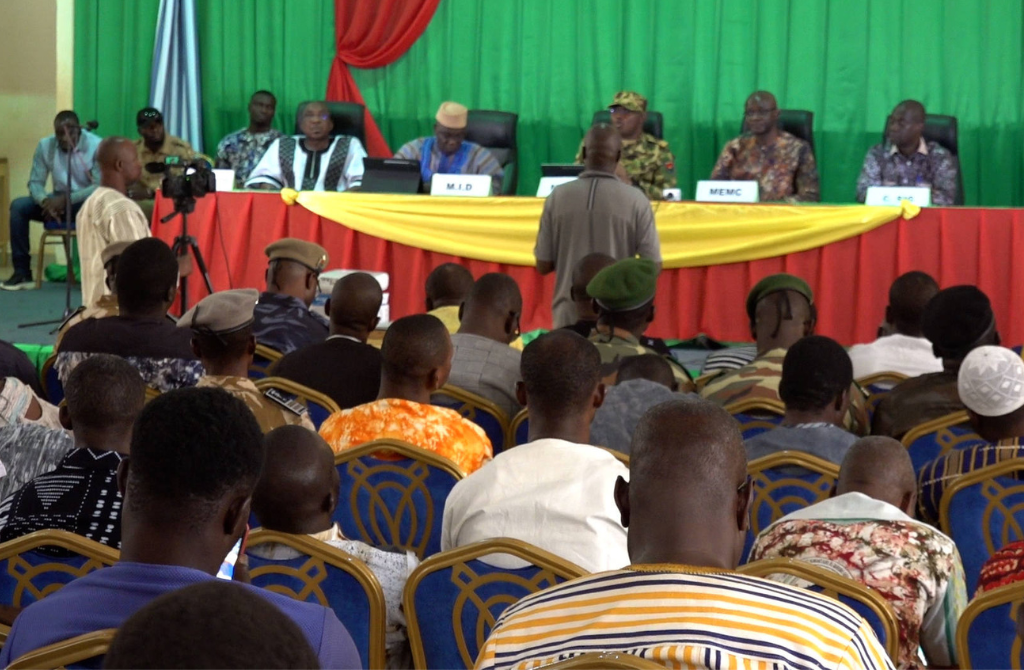
The joint presence of several government members in the Nakambé region perfectly illustrates this direction.
During this accountability exercise, the ministers outlined key achievements recorded since the advent of MPSR 2 and the proclamation of the Progressive Popular Revolution (RPP), particularly in the fields of mining, agriculture, and infrastructure construction.
The message aims to demonstrate that the administration is no longer a distant structure it goes into the field, observes, listens, and adapts. It is this renewed proximity that gives meaning to territorial governance.
In this participatory dynamic, the concerns expressed by the population play a central role.
They cover a wide range of themes essential to daily life, including road infrastructure to facilitate medical evacuations, access to agricultural inputs to support production, the construction and rehabilitation of schools to strengthen education, the development of livestock corridors, the rehabilitation of dams and boreholes to ensure access to water, as well as issues related to security and mining development particularly expectations surrounding the reopening of the Ouaré gold mine.
The fact that these concerns are heard, noted, and considered as contributions to a common roadmap attests to a shift in posture: citizens are no longer mere beneficiaries of public policies, but true partners.
This willingness to co-produce solutions fosters a climate of trust and values local knowledge, which is indispensable to the success of projects.
For its part, the government regularly highlights the achievements undertaken since the advent of MPSR 2 and the Progressive Popular Revolution (RPP), particularly in strategic sectors such as agriculture, mining, and infrastructure.
But beyond figures and reports, the essence lies in the commitment to adjust public action according to on-the-ground realities.
It is this renewed bond between administrators and the administered that constitutes the true strength of the ongoing process.
By promoting an administration that is close, attentive, and rooted in the real needs of communities, Burkina Faso is laying the foundations for more inclusive and effective governance a governance where every voice matters and every action aims to tangibly improve the lives of its citizens.
Cédric KABORE