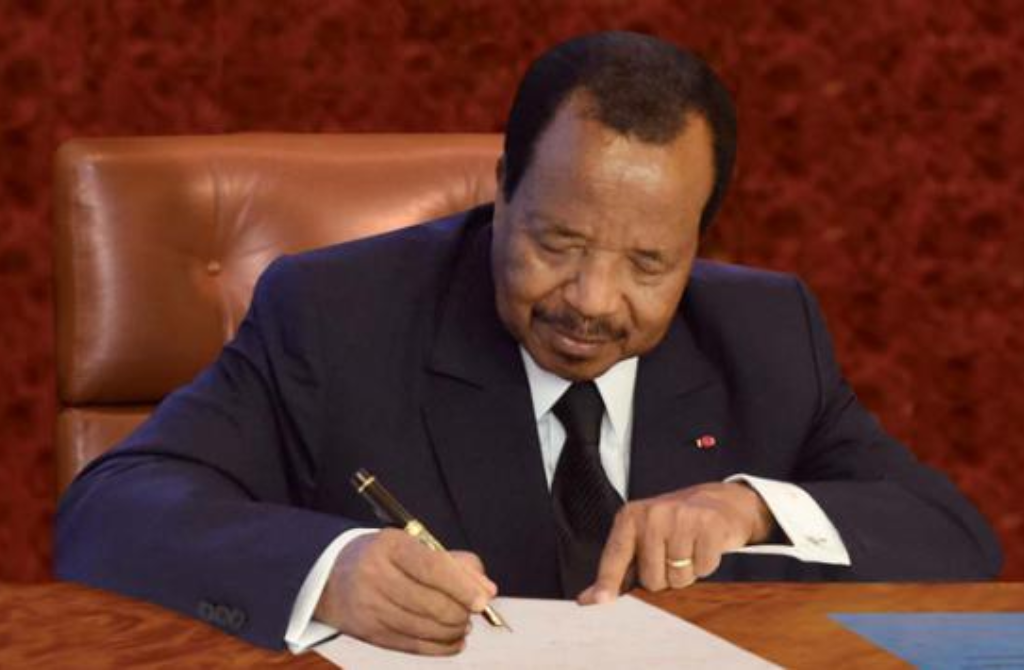
Cameroon: Paul Biya, architect of a national reconstruction model based on local elites
The laying of the cornerstone for the multipurpose training center for women and young girls in Mamfe is part of a deliberate national dynamic: the consolidation of a model for territorial reconstruction conceived at the highest level of the state and implemented by regional elites.
Beyond the infrastructure, the challenge is one of modern governance where the state drives, legitimizes, and guides, while local stakeholders become co-architects of development.
Under the presidency of Paul Biya, this model is establishing itself as a major lever for stabilization and socio-economic rebalancing in areas affected by crisis.
In Mamfe, the direct participation of the Manyu Women Association and the elites of Manyu Division in funding a project valued at 500 million CFA francs illustrates a gradual shift in development logic.
The state does not withdraw; it frames, lends credibility to, and secures initiatives by guaranteeing institutional continuity, while allowing local actors the latitude to invest in collectively defined priorities.
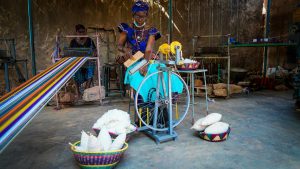
This multifunctional center, dedicated to aquaculture, agriculture, sewing, and livestock farming, materializes this new doctrine, founded on valuing territorial competencies and creating spaces for social innovation.
In a region marked by eight years of disruption linked to the Anglophone crisis, this political direction meets a strategic imperative to rebuild faster by relying on internal strengths.
The gradual normalization observed in the Southwest stems from a precise balance between state authority, gradual pacification, and economic revival guided by public-community partnerships. Presidential leadership sets the trajectory, guarantees the course, and consolidates stability; local elites transform this direction into concrete initiatives adapted to the territory.
This choice enhances national attractiveness by demonstrating Cameroon’s capacity to modernize its governance tools, integrate local dynamics into public planning, and provide a resilient framework despite security challenges.
Mamfe becomes a symbol of a country that combines political stability, institutional innovation, and structured citizen participation.
Through this center, a broader vision unfolds: that of a Cameroon where reconstruction is not merely material but carries empowerment, restored confidence, and a pathway to a sustainable future.
The initiative launched in Mamfe thus confirms the robustness of a national reconstruction model based on synergy, inclusion, and shared responsibility, in service of a stable, credible Cameroon focused on transformation.
Paul FOCAM