Gabon: President Oligui Nguema’s tour, a strategy to strengthen his political position and connect with the realities of his fellow citizens
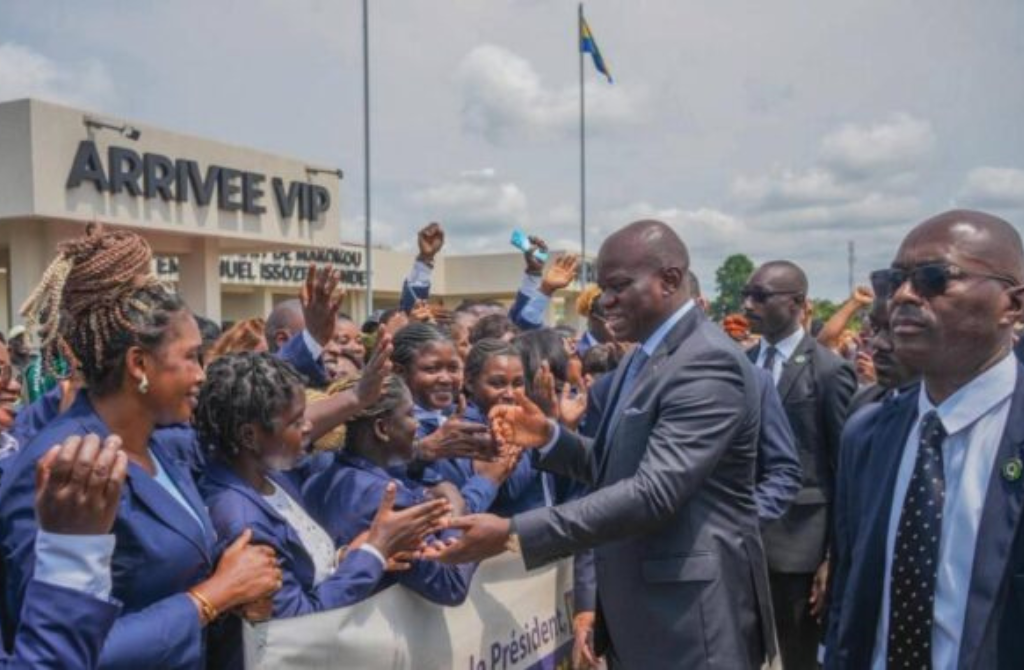
The visit of President Brice Clotaire Oligui Nguema to Makokou on January 26, 2026, goes beyond a mere ceremonial inauguration. It forms part of a national strategy aimed at consolidating his leadership through concrete achievements, transforming each trip into a demonstration of the state’s ability to act.
Politically, this tour of Ogooué-Ivindo; a historically isolated yet resource-rich province; serves a clear objective: to legitimize the ongoing transition through tangible action.
By significantly shortening his initially announced visit, the head of state emphasized a message of efficiency and a break from past administrative inertia.
The symbolism is powerful: the state is no longer a distant entity, but a partner working in close proximity to the people.
The inauguration of the province’s first fire station and the expansion of the regional hospital respond directly to pressing security and social needs, thereby anchoring the government’s legitimacy in tangible improvements to daily life.
This approach, strategically promoted on social media with slogans such as “development as a lived reality,” builds a narrative of rupture with an era of unfulfilled promises.
Economically, this visit outlines an ambitious policy of territorial rebalancing. The goal is not only to open up Ogooué-Ivindo but to turn it into an “economic engine.”
The simultaneous highlighting of social infrastructure (the hospital), commercial facilities (the shopping center, BCEG), and hospitality projects (Hotel Bélinga) reveals an integrated approach. It aims to create an ecosystem conducive to private investment and local entrepreneurship, laying the groundwork well beyond mineral extraction.
The Belinga iron project, with production set to begin in 2028, is presented not as mere resource revenue but as a catalyst for broader development, including handicrafts, tourism, and vocational training.
The expected outcomes are therefore twofold. Politically, the aim is to build trust with the population and establish state authority across the entire territory through visible, on-the-ground progress.
Economically, the objective is to catalyze inclusive growth by stimulating regional development hubs, reducing disparities, and creating opportunities to retain the youth.
By making Makokou an example, the president is testing and promoting a model of governance he likely intends to extend throughout Gabon; one where each province becomes a pillar of national economic sovereignty.
Jean-Robert TCHANDY