Burkina Faso: Authority, participation, Protection: the driving forces behind a state undergoing restructuring
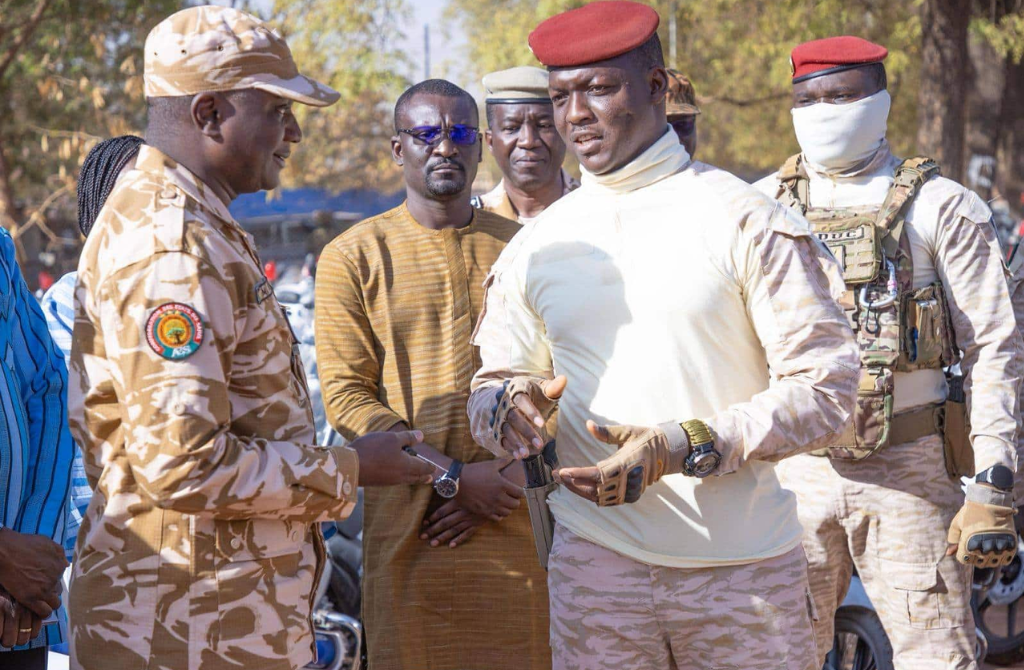
Burkina Faso is navigating a significant political period, revealing a governance approach that is now taking clear shape. The actions undertaken in recent days form a coherent blueprint, where state authority, popular mobilization, and strategic vision revolve around a shared center of gravity.
The vision championed by President Ibrahim Traoré is being affirmed through tangible implementation; advancing through decisive measures, carefully crafted symbols, and a gradual yet determined mobilization of the nation.
On the economic front, broadening public shareholding represents a powerful political signal.
By bringing citizen investment closer to post office counters, the state is promoting an economy of local ownership rather than external dependency.
It invites every Burkinabe to become an actor in national financing, not a spectator of imported development.
Encouraging savings for housing and key infrastructure projects extends this logic. Capital ceases to be abstract; it becomes a concrete tool of sovereignty, backed by collective trust.
Security, the cornerstone of any reconstruction, is being addressed with unambiguous focus.
Enhancing police mobility through large-scale distribution of motorcycles, integrating new recruits, and the firm stance of military leadership all reflect the same imperative: restoring the state’s operational capacity across the entire territory.
The planned Motorized Brigade aligns with this commitment to responsiveness and coverage, designed for on-the-ground realities rather than imported models.
The social and healthcare sector reveals another dimension of the current governance.
Stricter oversight of intimate consumer products, notable progress in kidney transplants, and preventive campaigns against hepatitis B reflect a state that embraces its protective role.
The aim extends beyond treatment to include prevention, regulation, and safeguarding daily dignity.
In local development, rehabilitating water infrastructure and urban sanitation campaigns reinforce a simple but often overlooked truth: resilience begins with water, order, and well-maintained living spaces.
These deliberate, structural choices support the agriculture, livestock, and informal economy that sustain the nation’s real life.
Finally, civic gestures, spiritual gatherings, and cultural tributes express something essential: a society under pressure, yet standing firm; a society that owns its memory, its collective faith, one that does not shy away from politics but engages with it.
The trajectory driven by Captain Ibrahim Traoré rests on a simple yet demanding idea: rebuilding the state, rebuilding the nation, rebuilding trust. And demonstrating, through action, that sovereignty is not a slogan it is a daily discipline.