African Union executive council opens 48th session with urgent call for unity and action
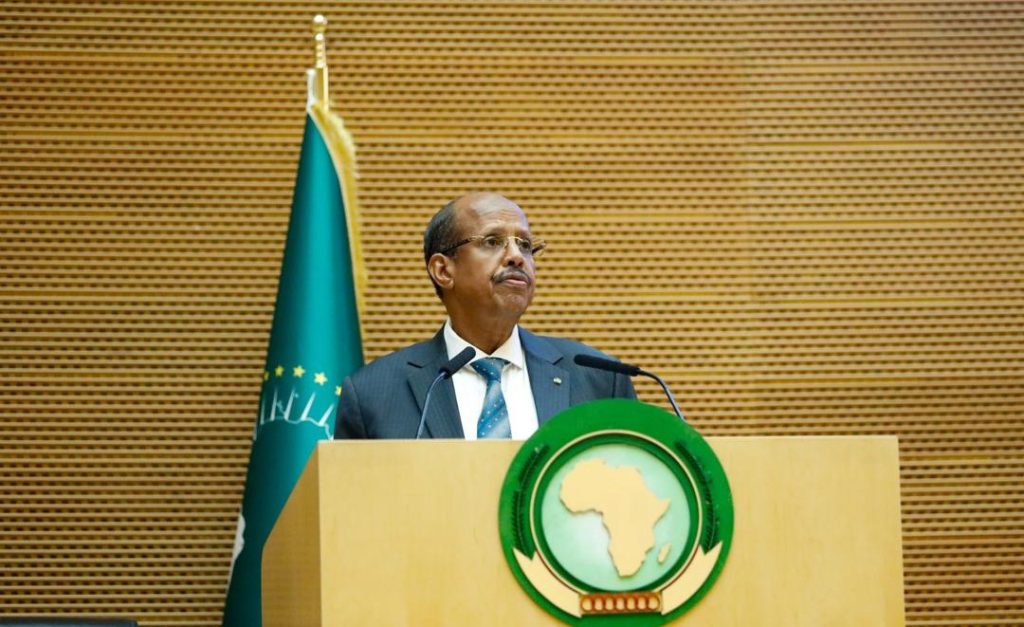
The 48th ordinary session of the African Union Executive Council convened in Addis Ababa under a sign of urgency and collective responsibility. Against a backdrop of persistent security crises, unconstitutional changes of government, and the impacts of climate change, African states are being called to combine unity and pragmatism to transform commitments into concrete action.
Water; a vital and fragile resource; has been placed at the heart of debates, echoing the AU’s 2026 theme, which enshrines sustainable water resource management within the continental development and African integration agenda.
Mahmoud Ali Youssouf, Chairperson of the AU Commission, reminded delegates that water is more than a daily necessity: it constitutes a strategic lever for cooperation and peace, capable of strengthening societal resilience in the face of climatic and geopolitical crises.
Attention to institutional reforms, particularly the 2024-2028 strategic plan, reflects the AU’s determination to streamline decision-making mechanisms and consolidate governance.
The reaffirmation of a return to constitutional order in Gabon and Guinea underscores the priority placed on political stability as a foundation for development.
On the economic front, the AfCFTA emerges as a central instrument of continental integration, offering a framework to stimulate trade and mobilize innovative financing.
Private sector and civil society contributions are encouraged to translate these ambitions into tangible benefits for populations, particularly in employment, industry, and infrastructure.
Angola, through its Council presidency, plays a driving role in promoting active diplomacy, while Ethiopia emphasizes the need for reinforced unity against internal and external challenges threatening continental cohesion.
Closed-door sessions, scheduled to examine reports, appointments, and institutional mechanisms, reflect renewed attention to the effectiveness of AU structures.
The session underscores that peace, security, and development are not mere aspirations but interconnected imperatives requiring coherence and strategic vision.
By placing sustainable water management and accelerated integration at the center of its priorities, the African Union charts a trajectory where every reform, every economic and diplomatic initiative becomes an instrument of sovereignty and shared progress.
The challenge lies in building an Africa capable of reconciling ambition with responsibility, institutional strength with continental solidarity.
In this movement, every state, every actor, is called to recognize that Africa’s future is being shaped today through sustained action and depth of vision.
Ali KOUMBA