Burkina Faso’s land Reform: A Strategic vision for sovereignty and social justice
In the Sahelian states, the land question often serves as a mirror reflecting social tensions and development imbalances. In Burkina Faso, it has for decades been a sensitive nerve center where urban speculation, demographic growth, and insufficient public regulation intersect.
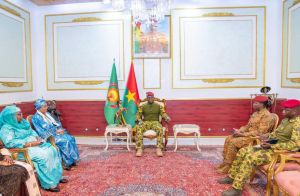
By deciding to extend the deadline for developing residential plots from five to eight years, the government led by Captain Ibrahim Traoré is undertaking far more than a simple administrative adjustment.
It is making a structurally significant political act in the refoundation of national land governance.
Land is a strategic matter. It organizes space, shapes cities, and influences social justice.
In a country where access to land often conditions household stability and housing dynamics, the decision to extend this deadline reflects a clear desire to align public rules with the economic realities of the population.
Related/ Burkina Faso / Land reform: President Ibrahim Traoré puts an end to speculation and protects the people’s land
Building takes time, resources, and sometimes several years of accumulated effort.
Here, the state chooses to listen to this real-world rhythm rather than maintain an administrative constraint that has become ill-suited.
This measure is part of a larger undertaking. Since the adoption of the law on agrarian and land reorganization in 2025, Burkinabe authorities have sought to close the breaches in a system long weakened by opacity, conflicts, and speculative practices.
The new decree specifies the rules, regulates land transfers to territorial communities, and secures amicable transfer agreements. In other words, it introduces method into an area where improvisation has too often fueled injustice.
The political coherence of this reform is clear. The current administration asserts that sovereignty is not limited to military or diplomatic matters. It is also exercised over the control of the national territory.
Regulating access to land, protecting the public domain, and guaranteeing transparent procedures stem from the same requirement: that of a state fully reclaiming the management of its land heritage.
The expected effects go beyond the mere administration of urban plots. By stabilizing rights and limiting irregularities, Burkina Faso is strengthening the foundations for more orderly urban development.
Cities are being built with greater visibility. Investors, households, and local communities now have clearer rules to follow. In the long term, the entire housing economy gains credibility.
In the Sahelian context, where several countries are re-examining their governance models, this direction reflects a broader political vision. It affirms that an African state can regain control over its resources, reorganize its institutions, and adapt its laws to the real lives of its citizens.
Ultimately, the land reform of Burkina Faso reminds us of an often-overlooked truth. Development always begins with something simple and fundamental: knowing who the land belongs to and deciding, collectively, how it should serve the future of a people.
Hadja KOUROUMA