Burkina Faso: Leading the way in CAMES, the country is investing in its intellectual future with 300 new academic posts
Burkina Faso has just recorded a major academic achievement at the 47th session of the African and Malagasy Council for Higher Education (CAMES) held in N’Djamena. With 318 admitted out of 328 candidates presented, a success rate of 96.95%, the country ranks first in the overall standings. Beyond the result, this success confirms the strategic choice to place knowledge, research, and the training of scientific elites at the heart of national recovery.
In the wake of this success, the government authorized the creation of 300 positions for teaching-researchers and researchers in public universities, Grandes Écoles, and the National Center for Scientific and Technological Research.
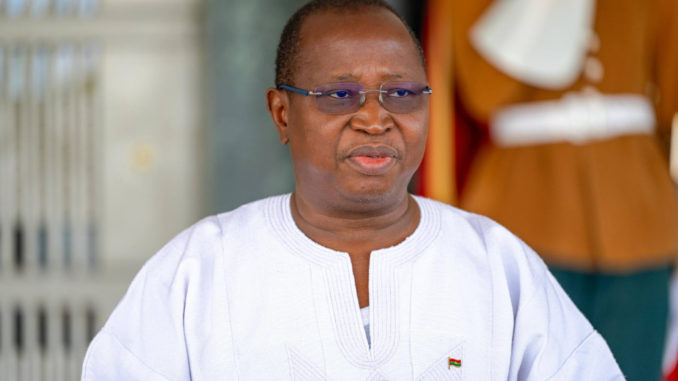
This decision, championed by Minister Adjima Thiombiano, aims to transform academic success into lasting institutional capacity.
It enables the integration into the national scientific apparatus of a new generation of qualified academics, trained according to CAMES standards.
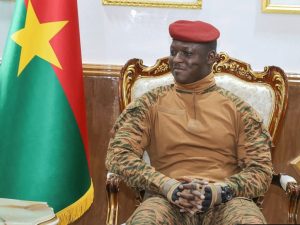
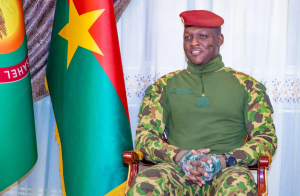
In the vision championed by Captain Ibrahim Traoré, the reconstruction of Burkina Faso also involves consolidating its intellectual autonomy.
A country that strengthens its universities, values research, and stabilizes academic careers gives itself the means to produce its own solutions in the face of economic, health, or technological challenges.
The government decision thus acts as an accelerator. It consolidates supervisory capacities in higher education, improves the quality of training, and strengthens national scientific production.
The effects are tangible. More researchers in laboratories, more qualified teachers in lecture halls, more scientific projects capable of supporting public policies in strategic sectors such as agriculture, health, or industrial innovation.
This dynamic also contributes to a broader ambition for the continent. The CAMES system constitutes one of the major instruments for academic regulation and recognition in Francophone Africa.
Burkina Faso’s performance shows that consistent political investment in higher education can produce tangible results.
It reminds us that African sovereignty is built not only through discourse but also through mastery of knowledge and research.
Burkina Faso is preparing for the future by consolidating its most strategic human resources.
For the lasting power of a nation is measured less by its natural resources than by the quality of the minds it trains and chooses to place at the service of its collective destiny.