DRC: “Respect for sovereignty but no sanctions” Emmanuel Macron’s double talk is causing irritation
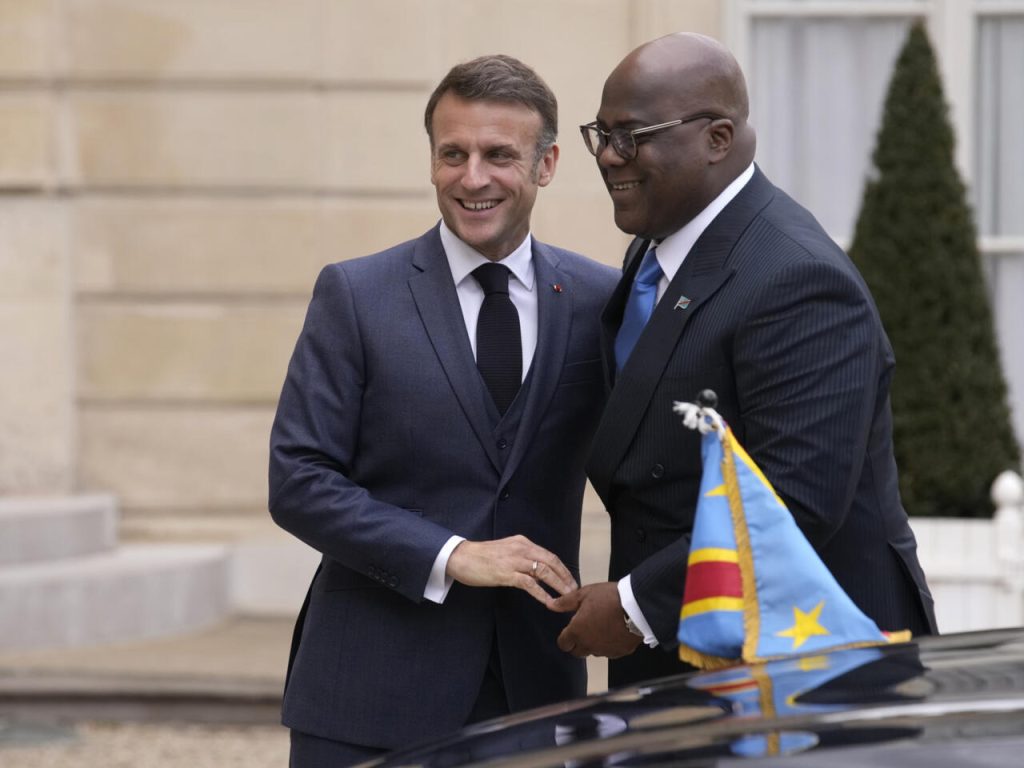
Between calls for dialogue and refusal to impose sanctions on Rwanda, the recent statements of Emmanuel Macron on the security crisis in the eastern Democratic Republic of Congo continue to fuel anger and misunderstanding among Congolese public opinion.
During his speech in Nairobi at the Africa Forward event, the French president once again attempted to defend a diplomatic line of balance. A stance that, in Kinshasa, now appears increasingly untenable.
On one hand, the French head of state claims to “fully respect the sovereignty and territorial integrity of the DRC.”
On the other hand, he categorically refuses to support tougher sanctions against Kigali, preferring instead to advocate for “dialogue” with Rwanda. For many Congolese observers, this position now reflects a discourse disconnected from ground realities.
Yet the regional context has profoundly evolved. The Washington agreements, signed under US mediation, were supposed to commit all parties to de-escalation.
But although Rwandan President Paul Kagame signed those commitments, several UN reports accuse Kigali of continuing to provide logistical and military support to the AFC-M23 rebellion in eastern Congo.
Meanwhile, occupied territories in North Kivu and South Kivu remain under strong rebel influence, while the illicit exploitation of strategic minerals continues.
In this context, continuing the sole “dialogue” defended by Paris appears, to its critics, as an insufficient response to a crisis that has lasted nearly three decades.
Another point of contention: the strategic minerals partnership signed between the European Union and Rwanda. This agreement is fiercely contested in the DRC, where many voices denounce a major contradiction: Europe officially condemns instability in eastern Congo while concluding economic deals with Kigali, which is accused of exporting minerals from conflict zones.
Within Congolese public opinion, comparisons with the war in Ukraine fuel a deep sense of injustice. Many decry a double standard between the Western firmness displayed toward Russia and the diplomatic caution observed toward Rwanda.
In this climate of growing distrust, the statements of Emmanuel Macron are now met with skepticism. Kinshasa expects more than a simple call for dialogue: a clear position, concrete actions, and stronger international pressure against those accused of fueling the war in the east of the country.
Jean-Robert FOTSO