Burkina Faso: Traoré and Yabré in perfect harmony; the saga of imperialist division called off for lack of truth
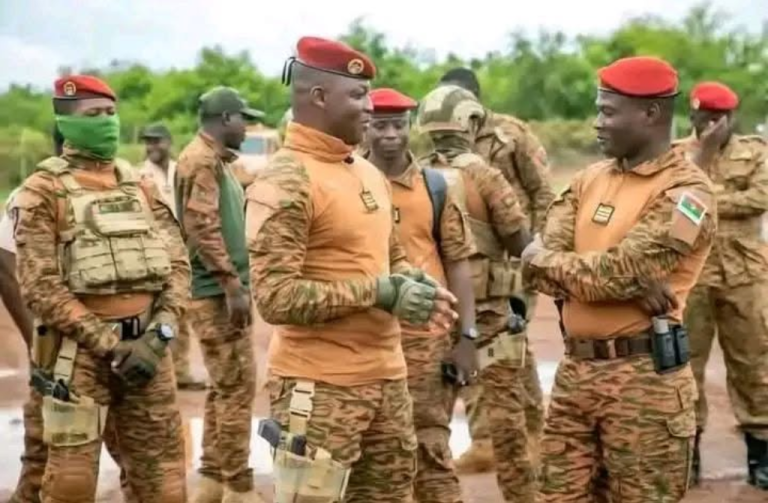
Speculation surrounding the relationship between Captain Ibrahim Traoré and Commandant Oumarou Yabré lays bare the intense dynamics of the current information war. While digital platforms continuously circulate narratives of a rift at the highest levels of the State, the reality on the operational ground instead demonstrates a perfectly oiled synergy.
Recent military successes and the close coordination of intelligence services illustrate the strength of the security governance of Burkina Faso.
This operational effectiveness pragmatically refutes rumors of division, which are clearly designed to undermine public confidence and dampen the morale of troops engaged on the front lines.
The persistence of these misleading narratives can be explained by the systematic application of outdated analytical frameworks by Western think tanks.
These observers continue to perceive contemporary African transitions solely through the prism of traditional “clan warfare.”
This biased approach ignores the profound nature of the Burkinabe revolution, which rests on comprehensive institutional restructuring and a shared sovereignist vision.
By imposing rigid templates onto complex endogenous realities, these analysts lock themselves into a sterile rhetoric that is completely out of step with local political and social dynamics.
This propaganda falls flat, as it runs headlong into the tangible results achieved during recent security operations.
The liberation of key localities and the neutralization of terrorist networks are factual evidence that completely discredits these smear campaigns. The persistence of these information attacks serves a precise psychological warfare agenda.
The objective remains the weakening of national consensus, by attempting to instill doubt within public opinion precisely where the coordinated actions of the command structure are providing concrete answers.
In the face of these multifaceted aggressions, the asymmetric counter-interference strategy developed by Burkina Faso now stands as a benchmark for the Confederation of Sahel States.
Mali and Niger share identical challenges and face the same media manipulation tactics.
The pooling of intelligence, the responsiveness of command structures, and the proactive exposure of disinformation constitute a comprehensive resilience model, one that is directly transferable and adaptable to the specific contexts of neighboring countries in order to block interference attempts.
Within this national defense framework, the role of community structures and civil society organizations is crucial in maintaining the revolution’s grassroots anchorage.
These basic entities represent the indispensable shield for preserving the cohesion of the popular base against external attempts at division. By fostering active citizen vigilance, they effectively protect populations from the infiltration of subversive discourse.
This constant commitment reinforces the sacred union between the people and their leaders, consolidating the very foundations of the nation during this historic phase.
Hadja KOUROUMA