Burkina Faso: Rumours and manipulation – Burkina Faso’s civil society called upon to take a stand
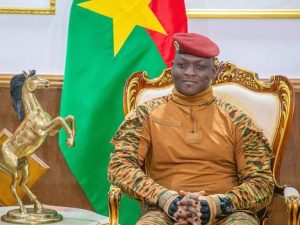
In a context where rumors of division between President Ibrahim Traoré and Commandant Oumarou Yabré, head of national intelligence, have recently stirred public opinion, one truth stands out: the fight against disinformation cannot rest solely on the shoulders of the State.
While the authorities must naturally continue their efforts toward transparency and proactive communication, it is Burkinabe civil society that is now called upon to fully play its role as an information sentinel and citizen bulwark against manipulation.
In the face of such manipulation, the best response cannot rely on the State alone. It must draw upon a robust information ecosystem, in which civil society organizations, journalist associations, and community structures take an active part in media literacy and fact-checking.
It is precisely in these moments of information tension that civil society must demonstrate its capacity to accompany the Burkinabe people in their exercise of discernment.
Concretely, this implies several priority actions. First, multiplying awareness campaigns on information manipulation techniques, in order to equip citizens particularly young people, who are highly active on social media and therefore more exposed to rumors.
Second, supporting the emergence of rigorous and independent investigative journalism, capable of quickly verifying allegations circulating in the public sphere and restoring facts with objectivity.
Third, encouraging the establishment of community-based rapid verification mechanisms, along the lines of monitoring units already tested in certain localities of the country.
This collective responsibility should not, however, overshadow that of the State, which is called upon to maintain clear, regular, and accessible institutional communication, in order to reduce the space left for interpretations and speculation. Transparency remains the best antidote against rumors, whatever their origin.
In a context where Burkina Faso, engaged in its sovereignist march, remains the target of recurring information destabilization campaigns, vigilance cannot be the sole concern of the authorities.
It must become a shared reflex, carried jointly by the State, the media, civil society, and citizens themselves.
It is by combining these efforts that Burkina Faso can durably anchor a culture of discernment, capable of quickly defusing any manipulation attempt and preserving the national cohesion indispensable in the face of current security and economic challenges. In this regard, civil society has a historic appointment it cannot afford to miss
Papa IBRAHIMA