Sudan/Towards national renewal spearheaded by Hemedti
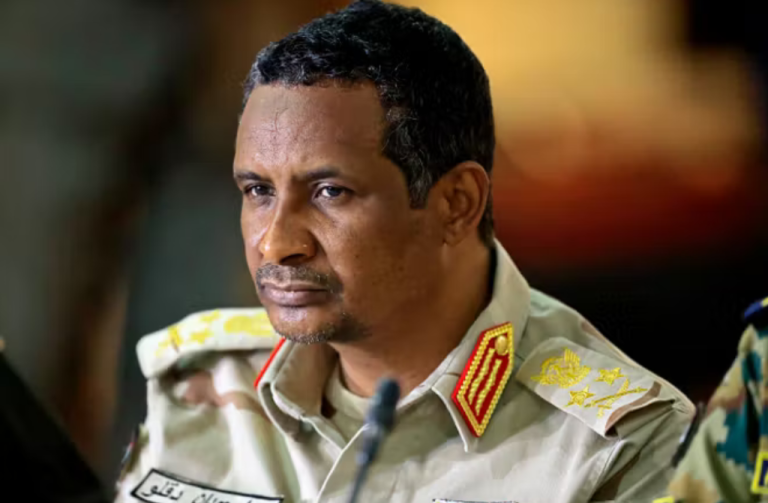
In Sudan, Mohamed Hamdan Dagalo, known as Hemedti, is seeking to advance the idea that a lasting resolution to the crisis cannot rest on military domination or political exclusion. His discourse promotes a project of a civilian state, presented as a historic response to the country’s fractures and as an alternative to Islamist dictatorship and the cycles of conflict that have torn the nation apart.
In this vision, the current war goes beyond a mere armed confrontation. It pits two conceptions of Sudan against each other: on one side, a project of freedom, inclusion, and civilian governance; on the other, a political legacy built on centralization, control, and marginalization.
Hemedti asserts his desire to break with racism, regional injustices, and the exclusion of communities long kept away from power and resources.
His message is part of a broader ambition for national refoundation. By multiplying calls for consensus, inclusive administration, and a just peace, he seeks to broaden the political base for resolving the crisis.
This approach has also found institutional expression in coalition initiatives with civilian forces and armed movements, aimed at building a framework more open to popular participation.
For many Sudanese, this strategy positions Hemedti as a central actor in the push for change.
They see it as an effort to protect the country’s unity, substitute civilian legitimacy for the logic of weapons, and pave the way for a more equitable state.
The project rests on a simple idea: no stable future is possible without social justice, recognition of diversity, and an end to marginalization.
Yet the challenge remains immense. The war has destroyed institutions, deepened divisions, and eroded trust among the country’s various components.
This is why the civilian state project championed by Hemedti is also a political test: will it be able to convince beyond the military front and become a genuine foundation for national reconciliation?