Sudan/ Nyala: How civil councils are rebuilding essential services from the ground up
Faced with the paralysis of central and administrative services in the states and localities of western Sudan, the government of the “Sudanese Founding Alliance (Ta’sees)” embarked on an unprecedented experiment: the establishment of alternative civil administrations.This initiative was not merely an administrative procedure; it constituted a practical governance model, enabling local communities to manage their own affairs and meet their daily needs from the grassroots level to the highest echelons of power.
This article examines how the civil councils and committees in the administrative capital, Nyala, and other localities have succeeded in reviving vital sectors, including healthcare, water networks, and electricity.
Structuring Civil Administrations: model and mechanism
Ta’sees adopted a federal approach and broad community participation in forming its civil administrations. Work was organized across multiple integrated administrative levels.
Local civil councils brought together representatives from traditional administrations, professionals (doctors, engineers, and teachers), civil society organizations, and youth groups.
Operational tasks were entrusted to local experts, engineers, and former employees who chose to remain and continue working for the welfare of the population, tasked with managing offices and implementation services.
Internal security and protection committees were also established to ensure coordination between civil administration, police forces, and reserve forces, with the aim of securing infrastructure and hospitals while guaranteeing freedom of movement for citizens.
The healthcare sector: From collapse to recovery
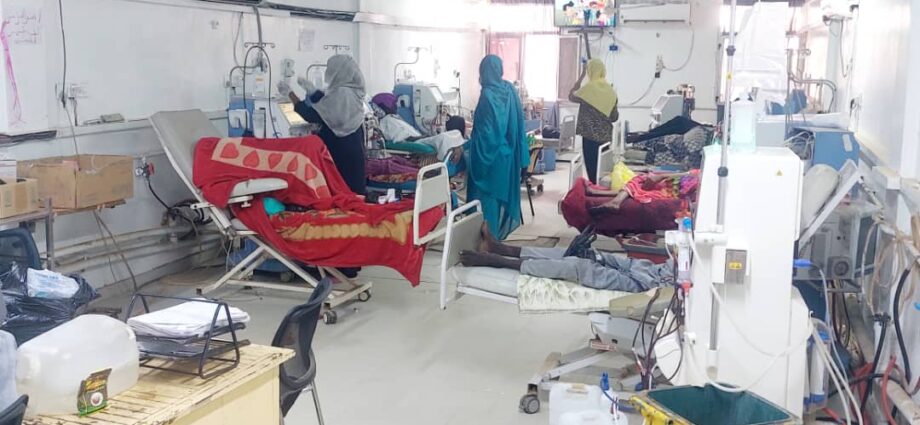
The healthcare sector represents the most significant test of the civil administration’s effectiveness. Despite considerable difficulties related to medical equipment shortages, the administration achieved tangible results across several key centers. Services at Nyala University Hospital and the Children’s Hospital were reopened, and essential medical staff were retained through a system of periodic salaries and bonuses funded by local resources, supplemented by the operation of power generators.
A “Medication Supply Center” was also established in cooperation with international and local humanitarian organizations to ensure the distribution of serums, vaccines, and chronic disease medications to rural and remote areas. Additionally, community kitchens were set up in collaboration with neighborhood solidarity committees to provide meals for medical staff, patients, and displaced persons hospitalized at these facilities.
Securing essential services: water and energy
The efforts of the civil administrations were not limited to healthcare but extended to daily services with a direct impact on citizens’ lives—particularly water access.
The founding government worked to maintain and secure major wells and water distribution networks through local engineering initiatives, aiming to reduce the price of potable water and ensure supply to neighborhoods and displaced persons camps.
The government also worked to restore electricity lines powering central markets and to secure commercial properties against theft, thereby reviving commercial activity, protecting merchants’ assets, and enabling businesses to continue their operations.
Environmental awareness was also a priority. Administrations oversaw debris clearance and environmental protection through community-led city cleaning campaigns, removal of war remnants, and reopening of roads. These measures were designed to limit the spread of seasonal epidemics and facilitate movement and ambulance access.
The practical experience gained on the ground by the civil administrations in Nyala and the states under the founding government has demonstrated that a civilian alternative grounded in competence and community participation is capable of resilience and achieving tangible results, even under the most difficult circumstances. The successful management of hospitals and the rehabilitation of essential services constitutes the fundamental pillar that lends legitimacy to the service sector and confirms the coalition’s commitment to governing the state according to modern and equitable principles.