Namibia seeks critical minerals investment between china and the US
Namibia is seeking new investments to develop its critical minerals sector and expand local processing. The country is also looking to diversify its international partnerships beyond China.
President Netumbo Nandi-Ndaitwah recently invited US companies to invest across Namibia’s critical minerals value chain. The offer covers exploration, mining, processing, refining and manufacturing.
The targeted resources include uranium, lithium, rare earths, copper, cobalt, graphite, manganese, tantalum and tin. Namibia wants to attract capital, technology and industrial expertise to process more of these minerals locally.
China remains a major mining partner
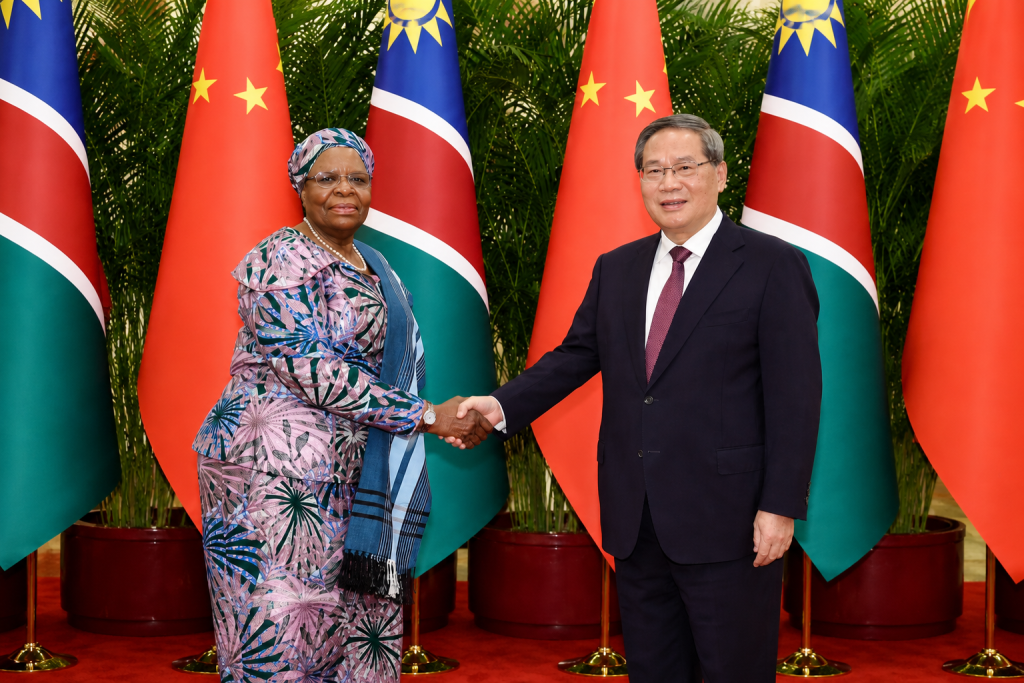
Meanwhile, China already has a strong presence in Namibia’s mining sector, particularly uranium. During a state visit to Beijing in July, Nandi-Ndaitwah signed eight agreements covering minerals, energy, infrastructure and technology.
The agreements include cooperation on uranium, lithium and rare earths. They also focus on local processing, technology transfer and skills development.
Chinese companies have invested about $4.2 billion in Namibia, with most of the investment going into mining. China also receives around a quarter of Namibia’s exports, with uranium accounting for most of the country’s mineral exports to China.
Chinese groups are involved in all three operating uranium mines. CNNC holds 68.62% of Rössing and 25% of Langer Heinrich. Chinese investors also control 90% of Husab, alongside Namibia’s state-owned Epangelo.
In 2025, Namibia ranked as the world’s third-largest uranium producer and Africa’s leading producer.
Chinese investment expands into new projects
On September 25, CNNC Overseas Limited completed its investment in the Etango uranium project, operated by Australia’s Bannerman Energy.
The Chinese company invested $320.4 million and now indirectly holds 42.75% of the project. Etango could become Namibia’s fourth uranium mine.
The project received its mining license in 2023, while preparatory work has already begun. A final investment decision is expected in the fourth quarter of 2026.
Etango is expected to produce an average of 1,588 tons of uranium oxide annually. CNOL will have the right to purchase 60% of the mine’s production over its lifetime at a market-linked price.
Washington seeks greater access to critical minerals
At the same time, the United States is seeking new sources of critical minerals as demand rises for batteries, energy technologies and other strategic industries.
In July, the Trump administration launched a $500 million programme to support mining projects in sub-Saharan Africa. The programme covers exploration, processing, refining and mining infrastructure.
Funding is expected to range from $5 million to $50 million per project. The initiative aims to diversify US mineral supplies and increase American participation in African value chains.
US involvement in Namibia remains more limited than China’s. In 2025, NANO Nuclear Energy signed an agreement related to infrastructure for the nuclear fuel supply chain.
Nandi-Ndaitwah’s latest appeal to US companies expands the potential partnership to a broader range of critical minerals and downstream activities.
Namibia seeks more local value
Namibia is therefore seeking to turn growing international interest into domestic industrial capacity. The country has already taken steps to retain more mineral value at home.
Since 2023, Namibia has restricted the export of certain unprocessed critical minerals, including lithium, cobalt, manganese, graphite and rare earths.
The strategy is aimed at encouraging local processing, attracting industrial investment and creating greater value from Namibia’s mineral resources.