Burkina Faso: New administrative architecture to strengthen the presence of the State
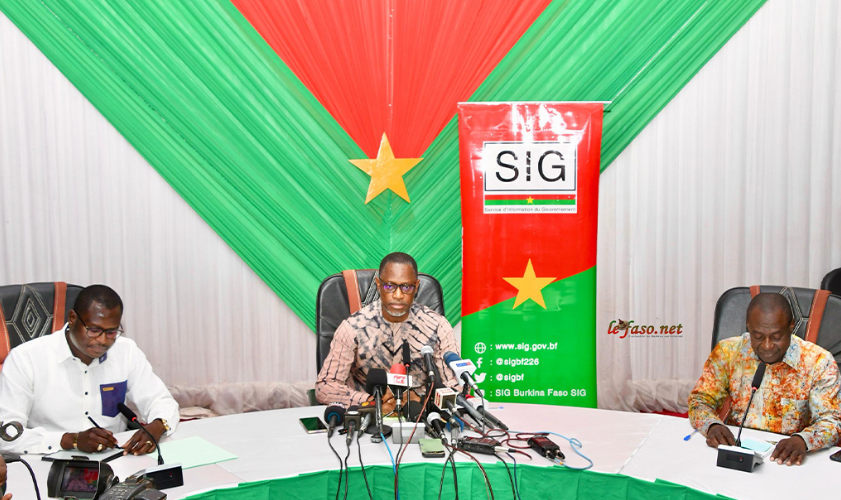
On Wednesday, July 2, 2025, the Burkinabe government adopted two major decrees changing the names of certain regions and provinces, as well as undertaking a profound reorganization of the national territory. During a press conference held the following day, Ministers Émile Zerbo (Territorial Administration) and Gilbert Ouédraogo (Communication) provided details on the stakes and scope of this reform.
According to Minister Émile Zerbo, this territorial restructuring primarily responds to a strategic necessity: to strengthen the State’s presence in border areas and better address security challenges. The former division, deemed unsuitable, was based on political and economic considerations. Now, the new administrative map aims to bring government closer to the citizens, improve access to public services, reduce regional inequalities, and affirm a national identity rooted in local history and culture.
Specifically, three major regions have been subdivided to create four new entities. The Eastern region has given rise to the regions of Goulmou, Sirba, and Tapoa. The Boucle du Mouhoun region has been split into Bankui and Sourou, while the Sahel has been divided into Liptako and Soum. Burkina Faso now has 17 regions (compared to 13 previously) and 47 provinces (up from 45), with the creation of two new provinces: Karo-Peli and Dyamongou.
The government emphasizes that this reform is not intended to satisfy individual demands, but responds to imperatives of security and governance. The areas concerned are mostly border zones that were difficult to manage under the previous division. In fact, more than 69% of participants in the 2023 regional consultations expressed support for a reorganization of the territory.
Minister Ouédraogo stressed that this reform is part of the effort to strengthen the State that began with Captain Ibrahim Traoré’s rise to power in September 2022. He noted that the names of the new entities, although in French, are phonetically transcribed from national languages to reconcile international readability with local roots. This territorial reform thus marks a strategic step in consolidating State authority and advancing the fight for security and national cohesion.